
Hanok: a traditional Korean house for kids to explore, from roof to floor
Four things to notice about a hanok
- ✓A hanok is a house built in a traditional Korean style.
- ✓On a tile-roofed house, fired clay tiles overlap. The eaves are the edges of the roof that extend beyond the walls.
- ✓At Namsangol Hanok Village, you can see several hanok, gates and stone walls in one place.
- ✓Traditional hanok can have spaces such as ondol rooms and wooden-floored maru. Spaces vary from house to house.
Explore a hanok traditional Korean house for kids with a free printable magic paper: print it or show it on a screen and go on a picture hunt together.

Nice to meet you, I'm Didi from Circus Company. The bandage on my cheek is my pride and joy.
A friend and I were looking at a hanok picture when they asked, “Why does the roof stick out so far?” I guessed it was for looks. My friend thought it might be because of the rain.
We opened the WAGZAK RUN magic paper for “Namsangol Hanok Village, Korea.” Point the app at it, and ta-da! Then let's explore the hanok story below. Come along with me!
A hanok traditional Korean house for kids: what can you spot?
- Tile roof — On a tile-roofed house, fired clay tiles overlap. The picture's lines show how.
- Eaves — Roof edges extend beyond the walls, helping shelter them from rain and affecting how much sunlight enters.
- Ondol and maru — Traditional hanok can have ondol rooms and maru. Ondol heats the floor using a firebox; maru is a wide space with a wooden floor.
- Gates and stone walls — Find these in hanok scenes, too.

A closer look at research on augmented reality
- Augmented reality: A review of 61 education studies reported a moderate positive effect on learning (d = .64). (Garzón et al., 2019, Virtual Reality)
The research did not examine WAGZAK RUN or focus only on hanok or cultural lessons. It does not establish an effect for this app. The magic paper invites conversation while looking at a screen together.
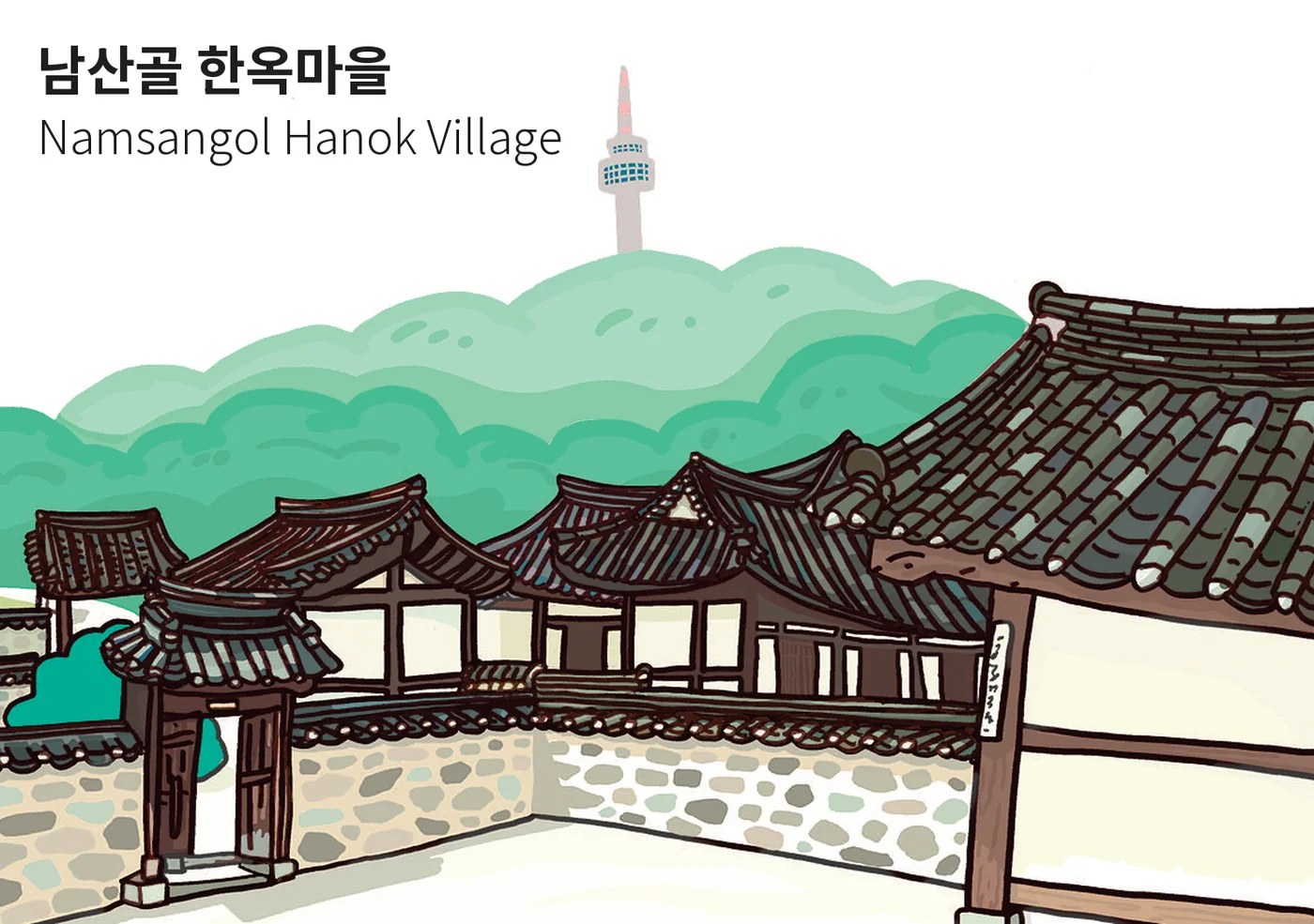
A village picture on magic paper
Get the “Namsangol Hanok Village, Korea” magic paper. It shows several hanok with tile roofs, a gate and a stone wall, with N Seoul Tower on Namsan in the distance.
Print it or display it on a classroom TV or laptop. Open WAGZAK RUN and point the app at the picture so it fills the screen.
Ta-da! Point the app at the magic paper and the picture moves. Afterwards, explore the hanok story together.

In the classroom, put the paper on a wall and take turns pointing the app at it. At home, spread the printed paper on the table.
Get this magic paper
Go on a picture hunt together
The pictures below illustrate Didi's story; they are not app screens. Look at them with your child and try these questions.
“Can you find the edge of the roof that sticks out?” — Those are the eaves. Trace the roof edge with a finger and imagine standing underneath when it rains.
“Where is the wall made of stones?” — The stone wall runs along the lower part of the picture. Compare the shapes of the stones.

“What is standing high behind the hanok?” — That's N Seoul Tower on Namsan. The picture brings traditional hanok and the city together.

Take your roof hunt beyond the picture
- Trace a roof — Copy the lines of the tile roof onto paper. Mark where the eaves end.
- Imagine hanok sounds — Make the sounds you might hear under the eaves on a rainy day, or while walking on an ondol floor or across a maru.
- Find roofs nearby — On a walk, look at the shapes of roofs in your neighborhood. Talk about how they are similar to or different from a hanok roof.
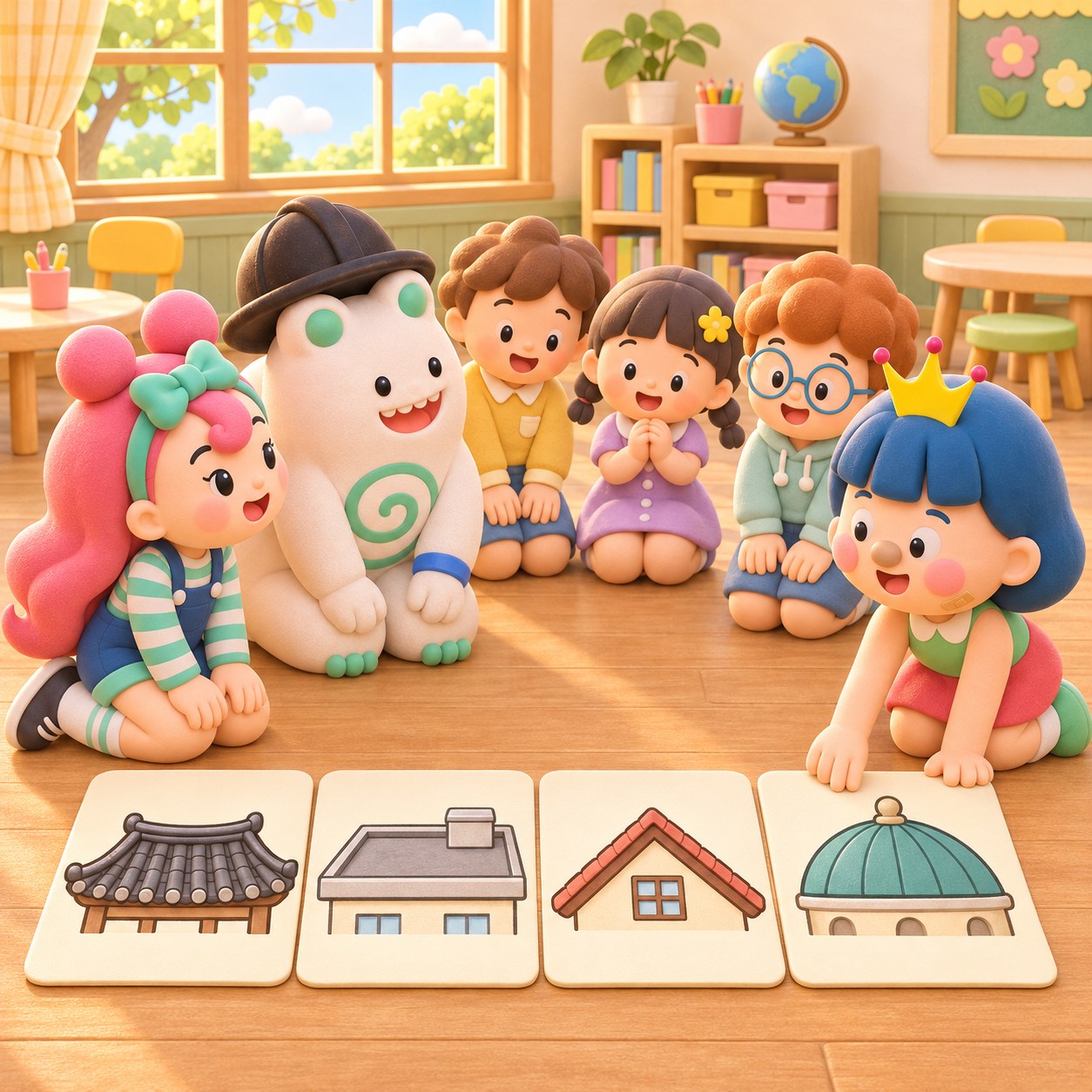
This activity does not replace a history lesson. It offers a chance to talk together before or after reading a book or listening to a teacher.
My friend and I both had a point: eaves help keep off rain and regulate sunlight. We found a hanok from a book in a picture, too. On our next walk, what kind of roof will catch your eye?
See you on the roof hunt,
Didi
About WAGZAK RUN
WAGZAK RUN is an augmented reality (AR) learning-through-play app made by Circus Company. Print the magic paper or display it on a screen, then point the app at it to see the picture move. Schools, individuals and businesses can choose from 51 languages and use it free of a monthly subscription fee.
Frequently asked questions
What is a hanok?
A hanok is a house built in a traditional Korean style. Some have tile roofs, eaves, ondol rooms and maru; the spaces vary from house to house.
What are eaves?
They are the edges of a roof that extend beyond the walls. They help shelter the walls from rain and affect how much sunlight enters a room.
What is ondol?
Ondol is a heating system that warms the floor using heat from a firebox.
Do I need to prepare the picture before using the magic paper?
The picture is ready to use. Print it or display it on a TV or laptop, then open WAGZAK RUN on a phone or tablet and point it at the picture.
Is there a set age for this activity?
No age is specified. Explore the picture with an adult and make up picture-hunt questions together.
Ready for a hanok picture hunt this weekend?
Getting started takes three steps.
- Get the magic paper — Open the hanok village magic paper. It is free to get, with no sign-up.
- Get WAGZAK RUN — Download the app and choose from 51 languages.
- Point and look — Fill the screen with the picture. If this is your first time, see how to use it.

- WAGZAK RUN · Circus Company · free with no monthly subscription fee · 51 languages · https://app.wagzak.io/en/