
When the light turns green, is it okay to step out first?
When the light turns green, can you cross right away?
Didi and Jun learn the crosswalk rules one step at a time, nice and easy.
Before you meet the real road, let your body remember the steps first.
The light turns green, and Jun is about to take a step
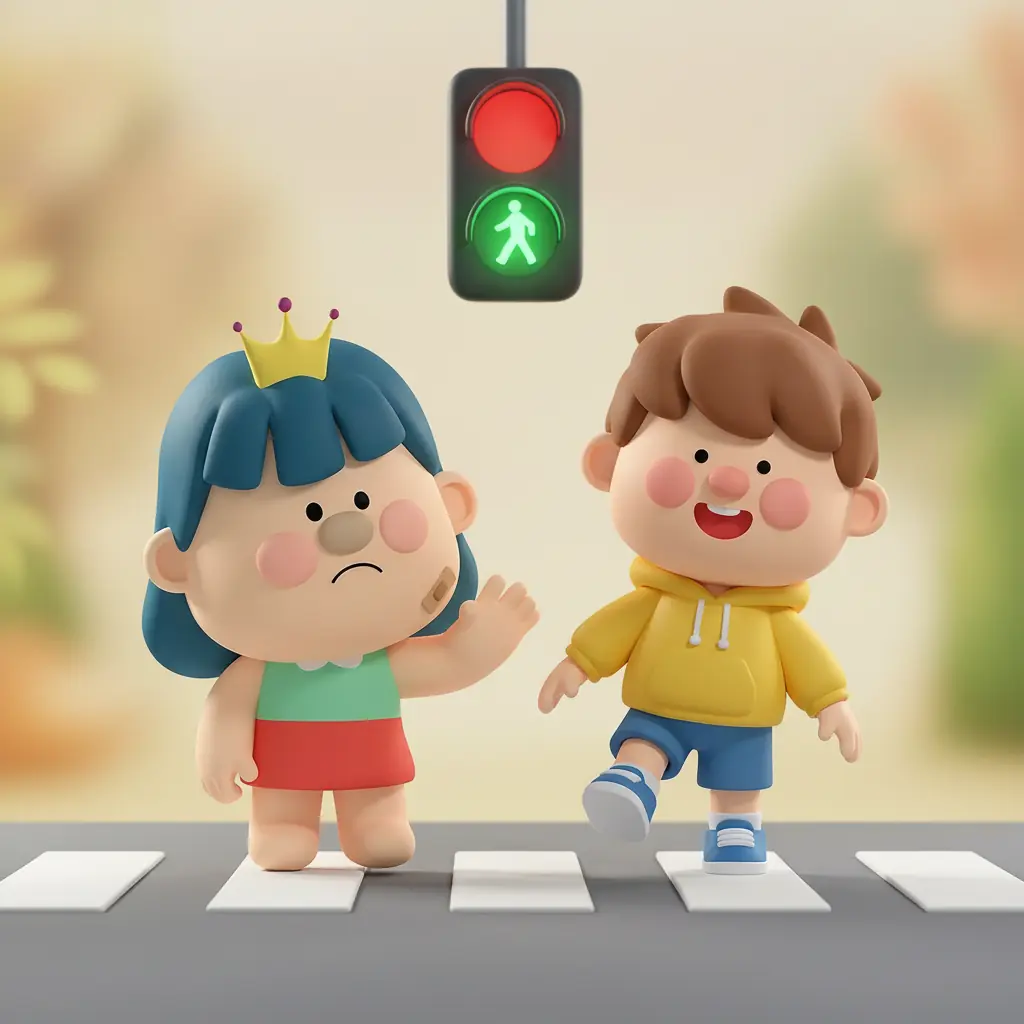
"Oh! Green light! Let's go!"
Jun excitedly reaches one foot forward.
I was standing right beside him, about to cross together, but my heart went thump-thump.
Does a green light really mean you can just go ahead and cross?
On a real road, one mistake can't be taken back. So today, we decided to practice crossing a crosswalk step by step in WAGZAK JUMP.
I tap the button, and right in the middle of the screen a white-striped crosswalk appears. (It's not a real road — it's practice, so no worries!)
Then a sparkling safety fairy appears and gently touches Jun's shoulder. "Jun, there are rules you must follow when crossing a crosswalk."
On a red light, wait calmly behind the yellow line
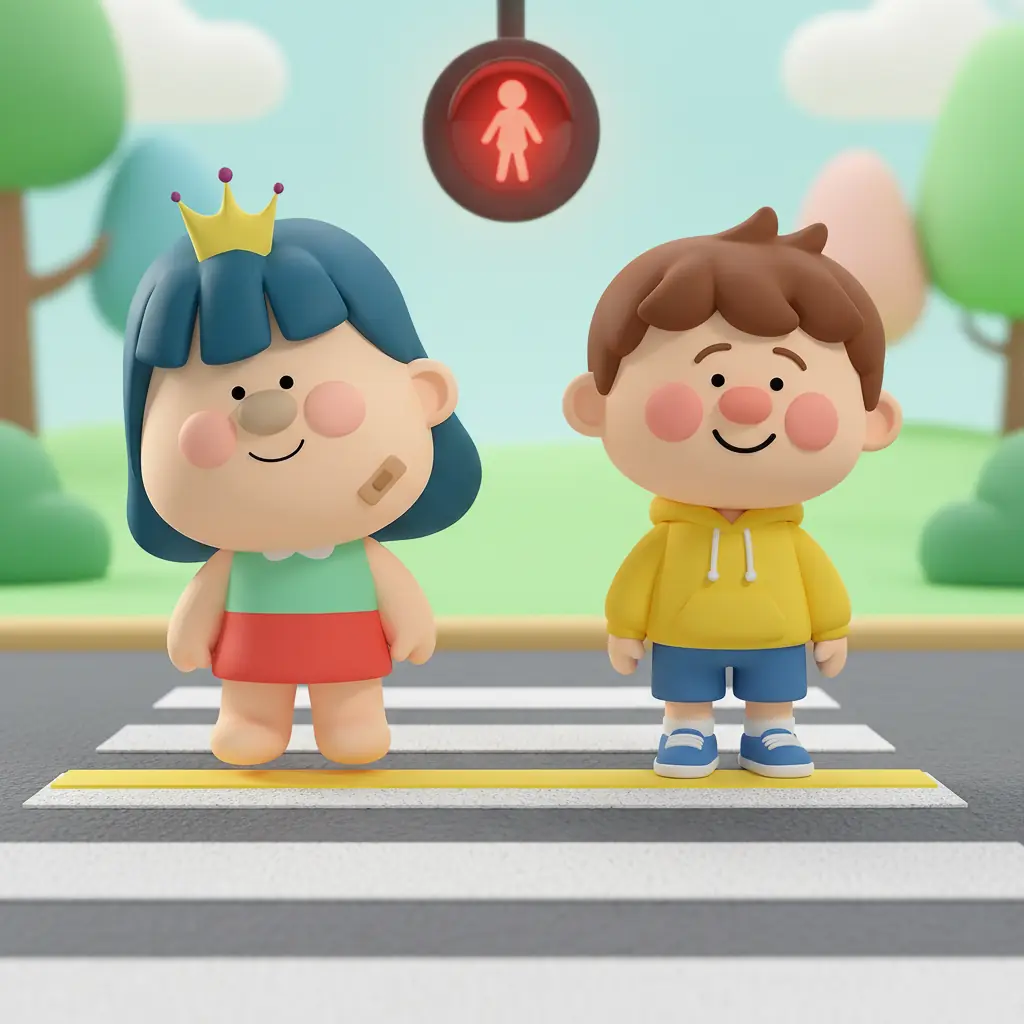
First — when the traffic light is red.
Jun starts creeping his toes toward the road.
The fairy quickly tells him, "When the light is red, step one foot back and wait behind the yellow line."
That yellow line painted at the edge of the road is the "stop here" spot.
Jun scoots back and the fairy smiles. I line up right beside him.
Waiting is also a real safety promise. One step back, nice and still!
It's green — but can you just go?
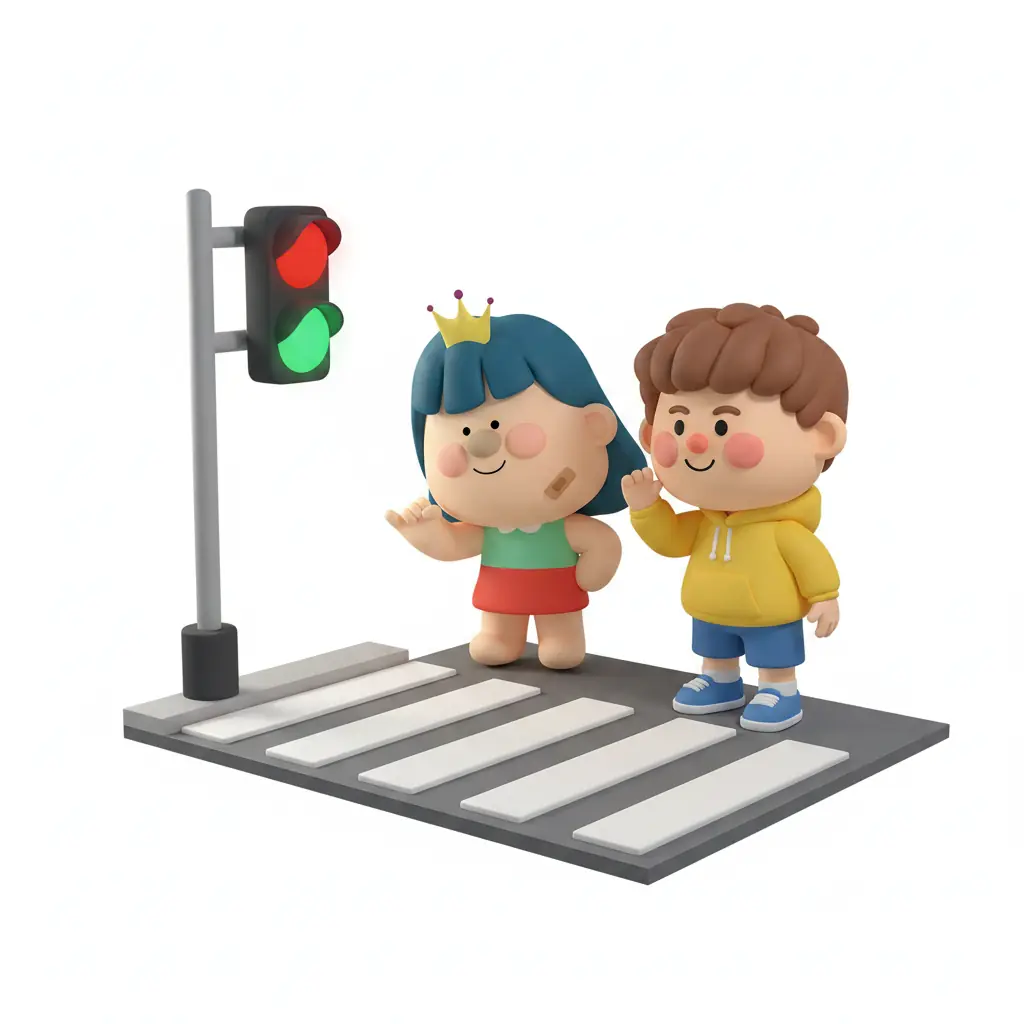
Finally, the green light comes on.
"Green light!" Jun tries to dash out again.
The fairy calmly raises a hand. "When the light turns green, first check that the cars on both sides have completely stopped before you cross."
So we turn our heads left — nod — right — nod. We slowly look with both eyes to make sure all the cars have stopped.
The fairy explains why. "If you cross before all the cars have stopped, an accident could happen."
Green doesn't mean "just go" — it means "check that it's safe, then go." Wow, that's really important.
Raise your hand high — so drivers can see you!
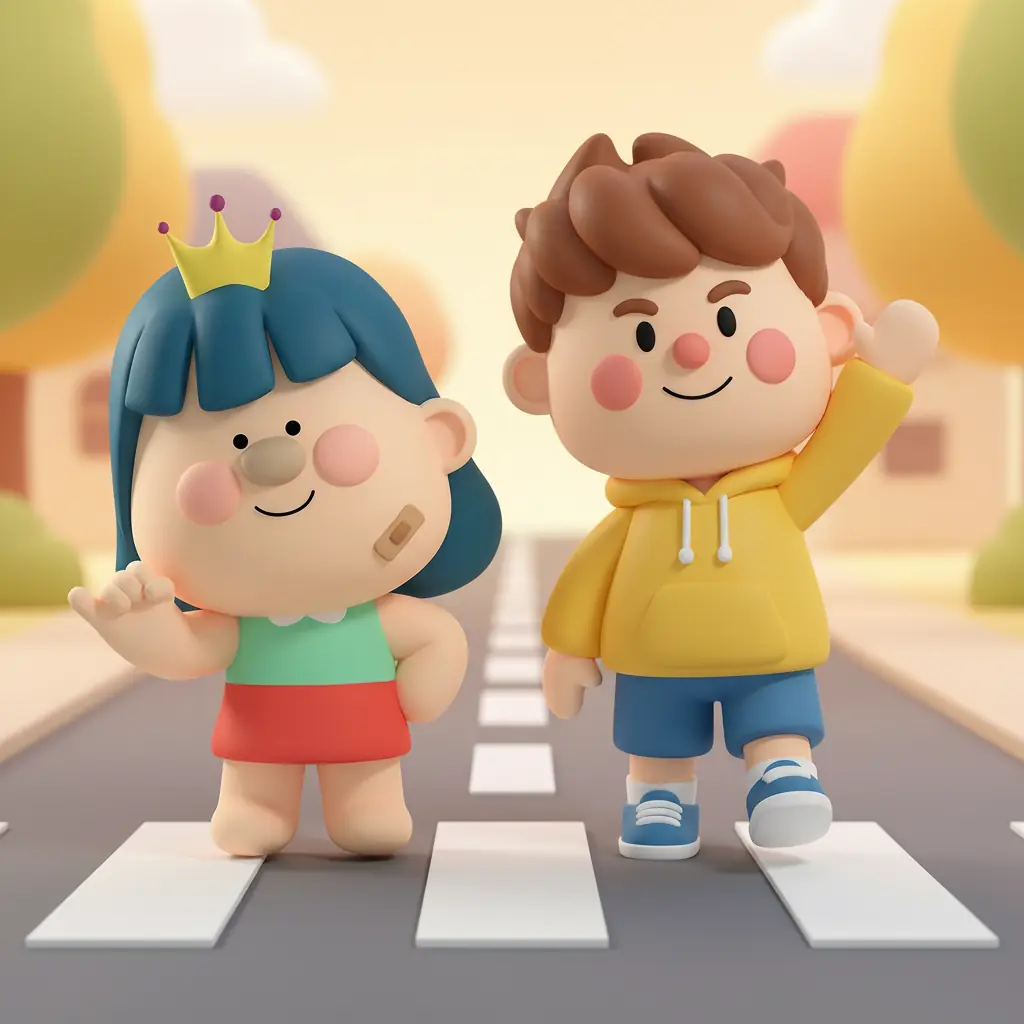
We've checked that all the cars have stopped — now it's time to cross.
The fairy stretches an arm way up. "When you cross, raise your hand like this."
We're shorter than adults, so a driver might not be able to see us easily.
If you raise your hand high, the driver can notice: "Oh, someone is crossing!"
Jun stretches his arm up and walks step by step saying "Hey, hey — I'm crossing!" Raising your hand isn't embarrassing — it's the smart way to keep yourself safe.
When the green light is flashing, which is the safe choice?
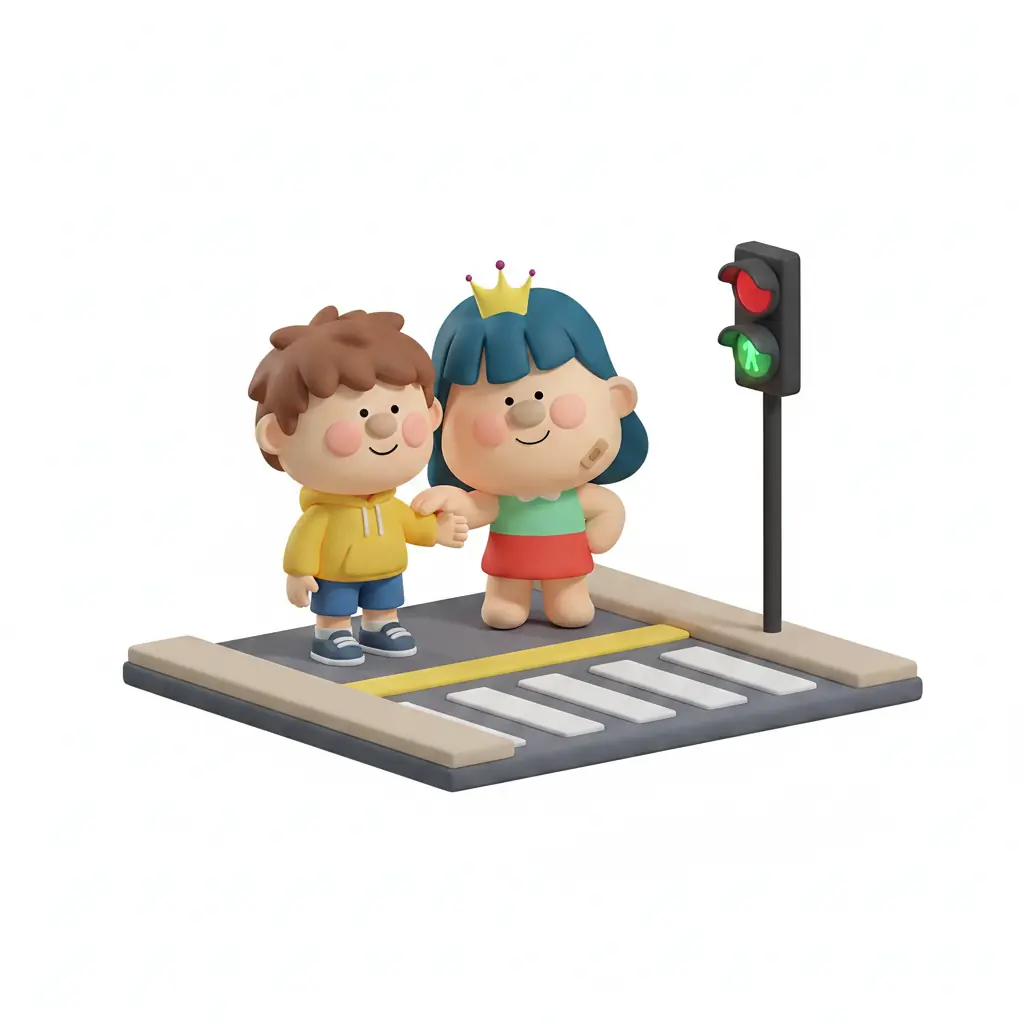
This time the signal starts flashing.
The fairy says calmly, "When the green light is flashing, think about two different situations."
If you haven't stepped onto the crosswalk yet — don't rush and run; wait behind the yellow line for the next green light.
If you've already started crossing — don't stop in the middle; keep walking at the same pace until you reach the other side. Stopping in the middle is actually more dangerous.
Jun nods along. "No matter how rushed I feel, I'll be careful, and careful again. Hehe~." The more in a hurry you are, the slower you go — that's the fastest way!
Everyone crosses in their own way
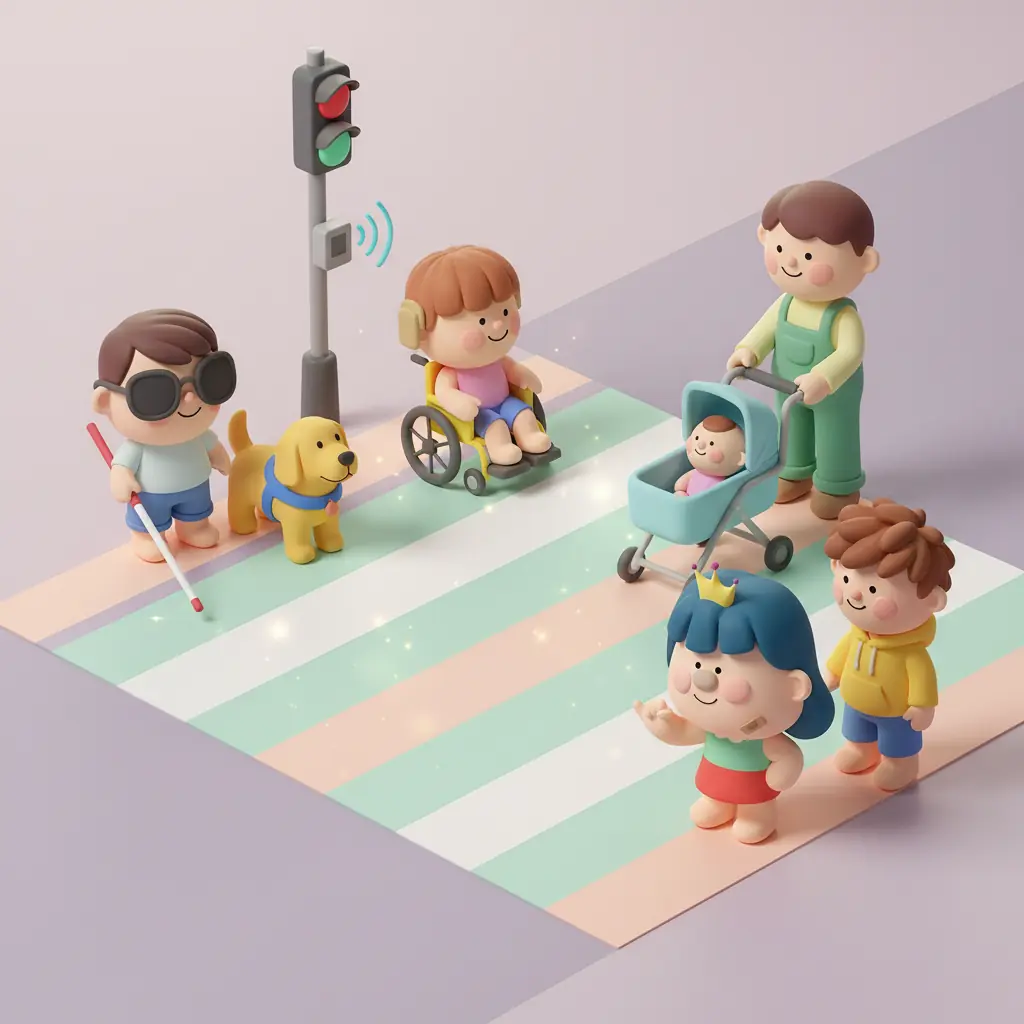
This time the fairy shares a very warm story.
"Each person may cross the road in a slightly different way. Everyone crosses safely using the method that works best for them."
A friend who has difficulty seeing listens to the audible traffic signal that announces it's safe to cross.
An audible traffic signal is a wonderful road safety device that tells you with a sound when it's okay to cross.
With the help of a guide dog or a person nearby, they raise their hand and cross slowly.
A friend who has difficulty hearing checks the traffic light and watches the cars more carefully before crossing.
A friend in a wheelchair, or an adult pushing a stroller, also makes sure cars have stopped and crosses slowly together.
The fairy says, "Even if the way is different, everyone can cross the road safely."
Those words stayed with me. When a friend is crossing, I should wait quietly so the audible signal can be heard clearly.
Narrow lanes and rainy days — how do you walk safely?
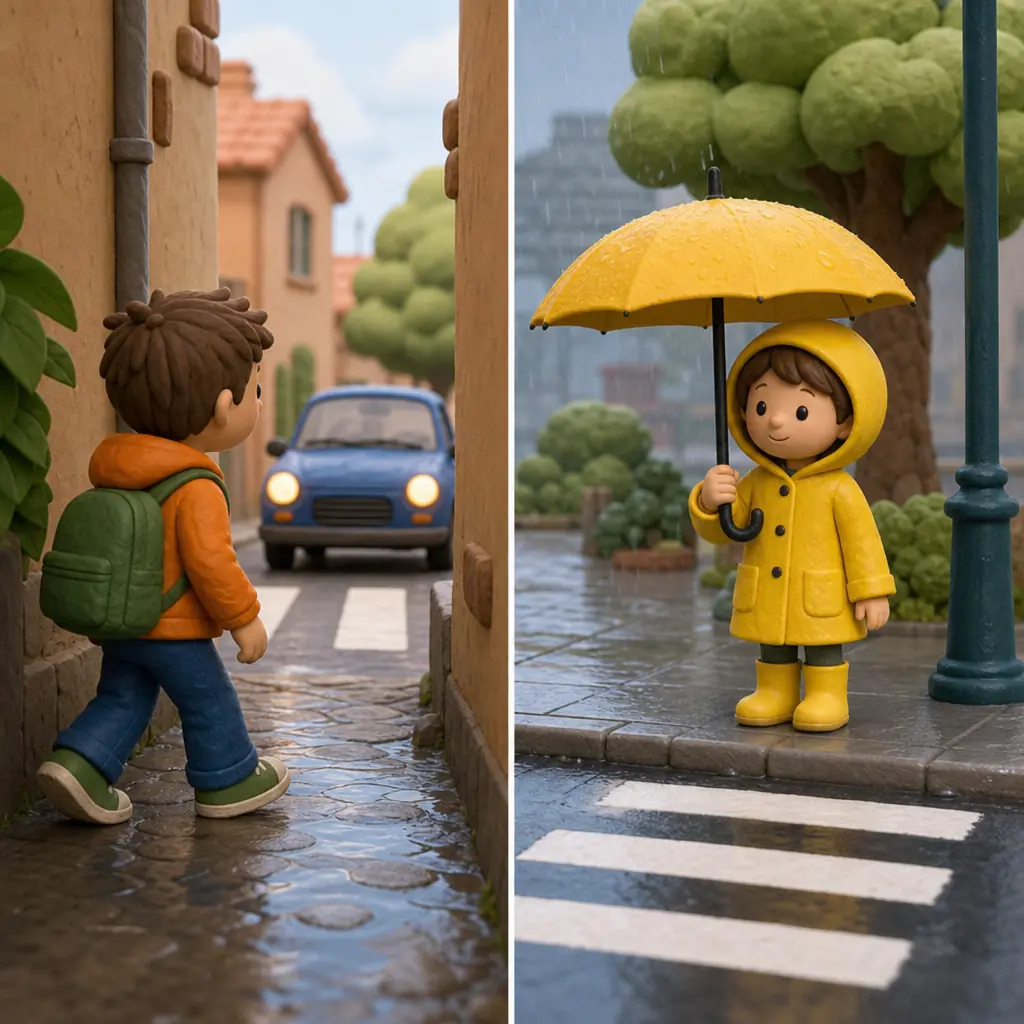
The fairy shows us other roads too. It's not just crosswalks you need to be careful about.
In a narrow lane, don't run. A car might suddenly pop out from around the corner. When turning a corner, stop for a moment and look around first.
In a narrow lane, you should walk facing the traffic. If a car is behind you, it might not see you — so walk facing the direction the cars are coming from.
Play ball in a park or playground — somewhere wide and safe — not in a narrow lane!
On a rainy day, pulling your umbrella down too low blocks your view and is dangerous.
Hold your umbrella upright and look carefully for cars. Wearing bright-colored clothes also helps drivers spot you more easily.
Jun flaps his yellow raincoat. "Yay, I'll be easy to see even on rainy days!"
What are the rules for school buses and bicycles?
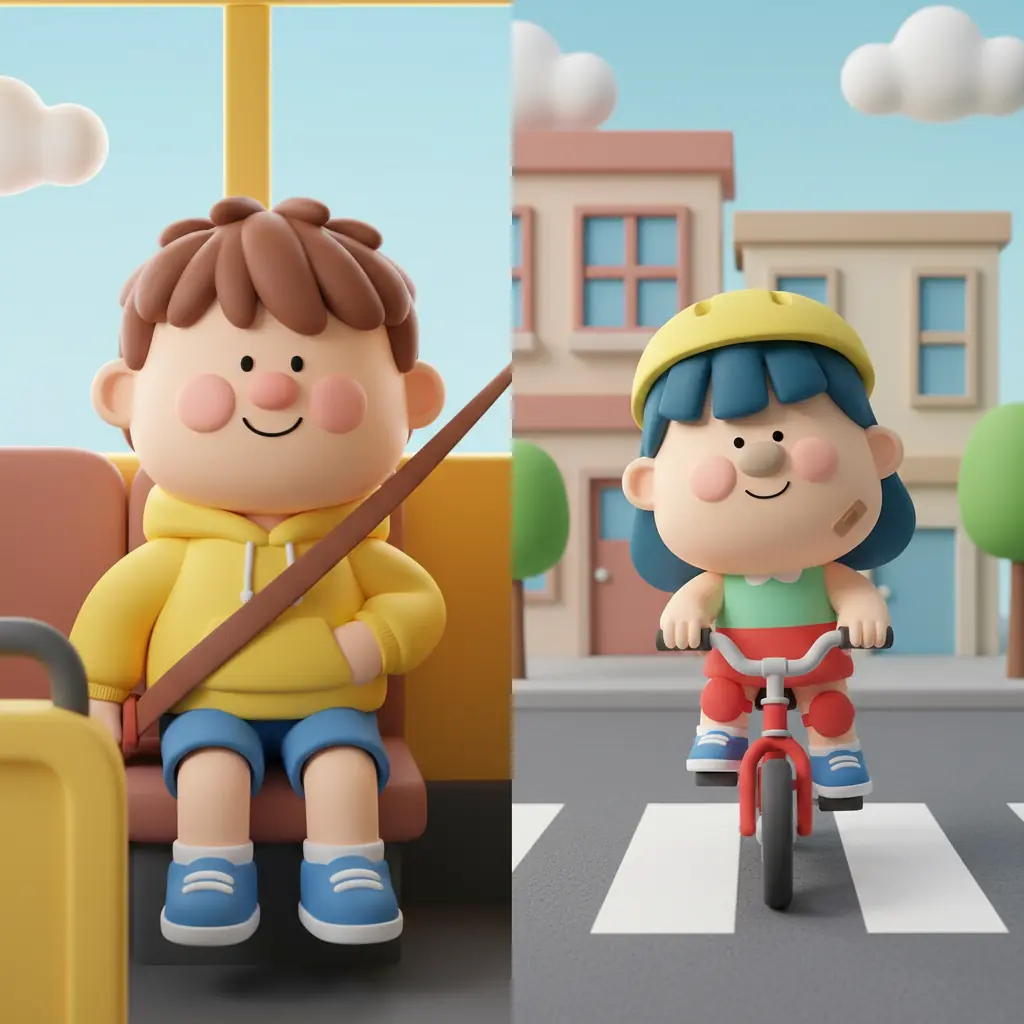
The fairy shares two more things at the end.
When you get on a school bus, always buckle your seatbelt and sit still without fooling around.
Be careful not to get your bag strap or clothes caught in the bus door, and never stick your head or hands out the window.
When getting off, wait until the bus has completely stopped, then look left and right before stepping out.
When riding a bicycle or scooter, always wear a helmet and knee pads.
And ride in safe places like a school playground or park — not on busy roads.
Jun puts on his helmet and looks pretty cool. A helmet actually looks great on you!
Before you meet the real road, shall we try it once?
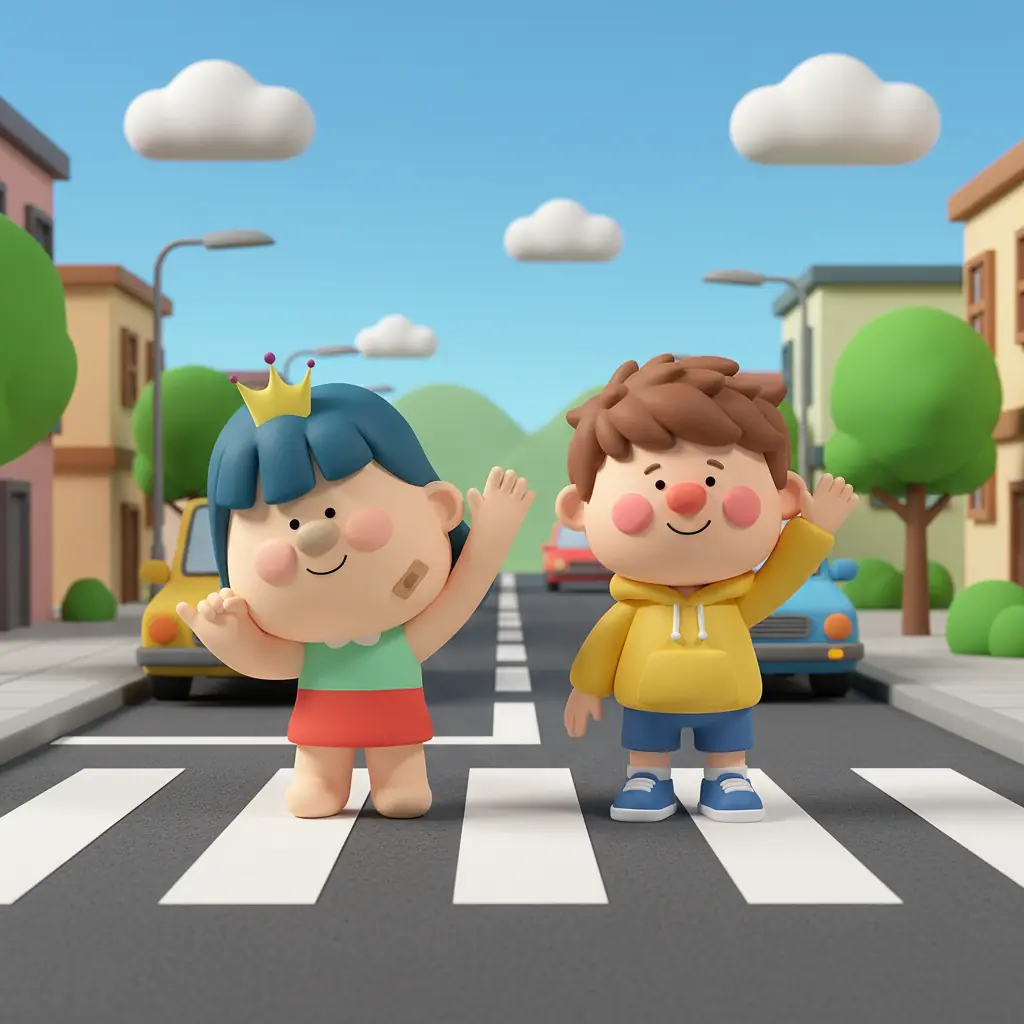
Now it's time to try it on a real road.
We stood side by side in front of the crosswalk on the way to school.
On a red light — one step back behind the yellow line, nice and still.
When the green light comes on — don't go right away; turn your head left and right to check that all the cars have stopped.
Raise your hand high, and walk slowly. Keep looking both ways until you're all the way across.
Jun follows along carefully and grins. "So this is how you do it!"
Stop, look, hand up, walk slowly.
After practicing together a few times, it feels like my body remembers the order all by itself.

At first, my heart was pounding in front of the green light — but not anymore.
Now that I know how to cross, the road isn't scary at all.
Stop, look, hand up, walk slowly. Just remember these four things.
A green light doesn't mean "just go" — it means "check it's safe, then go."
And no matter how a friend crosses, we can all wait for each other so everyone gets across safely.
Remember what we learned today, and keep practicing from time to time. Want to try it with me? Hehe.
▶ WAGZAK JUMP Real AR Screens
Didi and Jun practiced crosswalk safety — now experience it in AR yourself
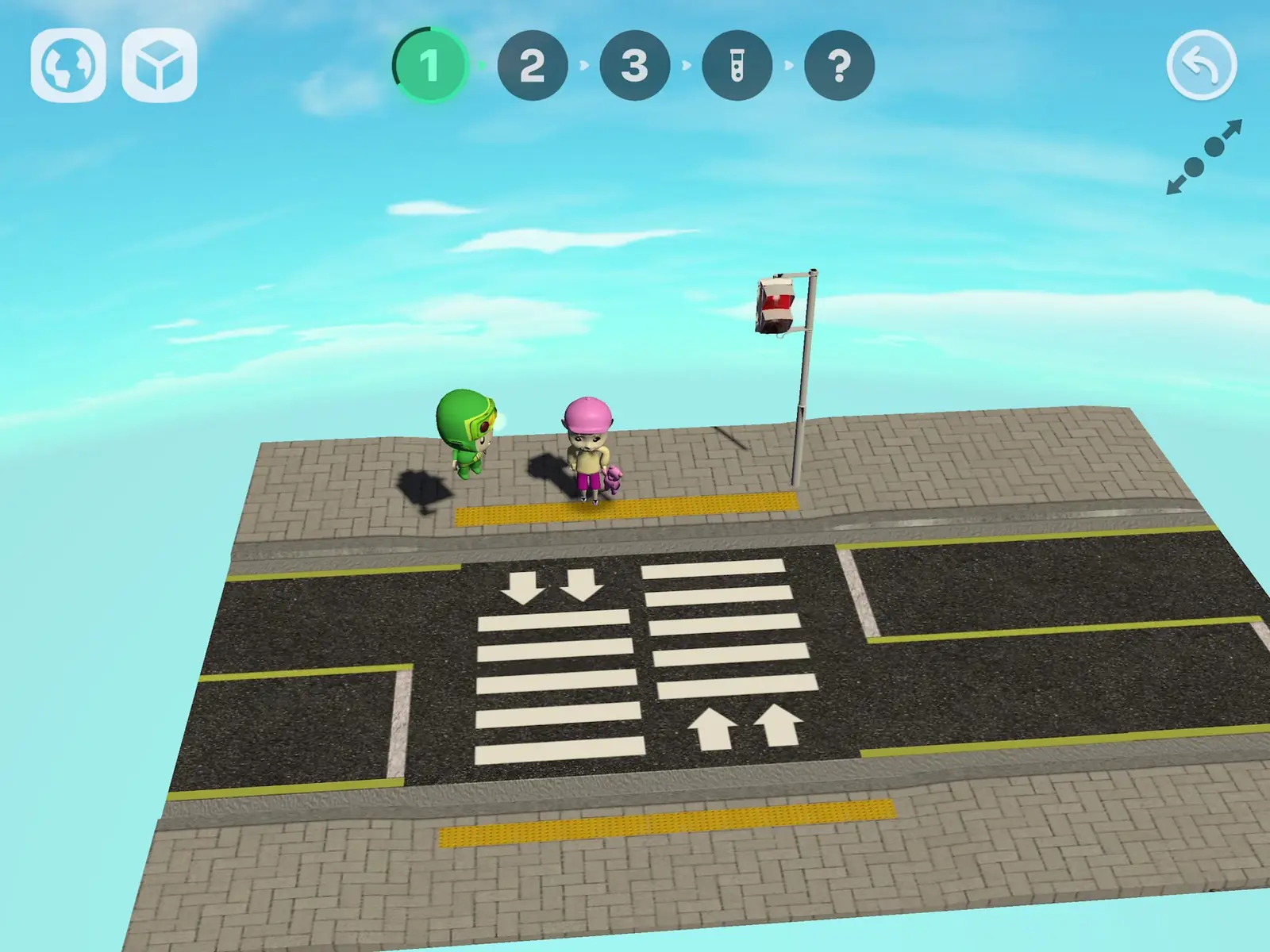
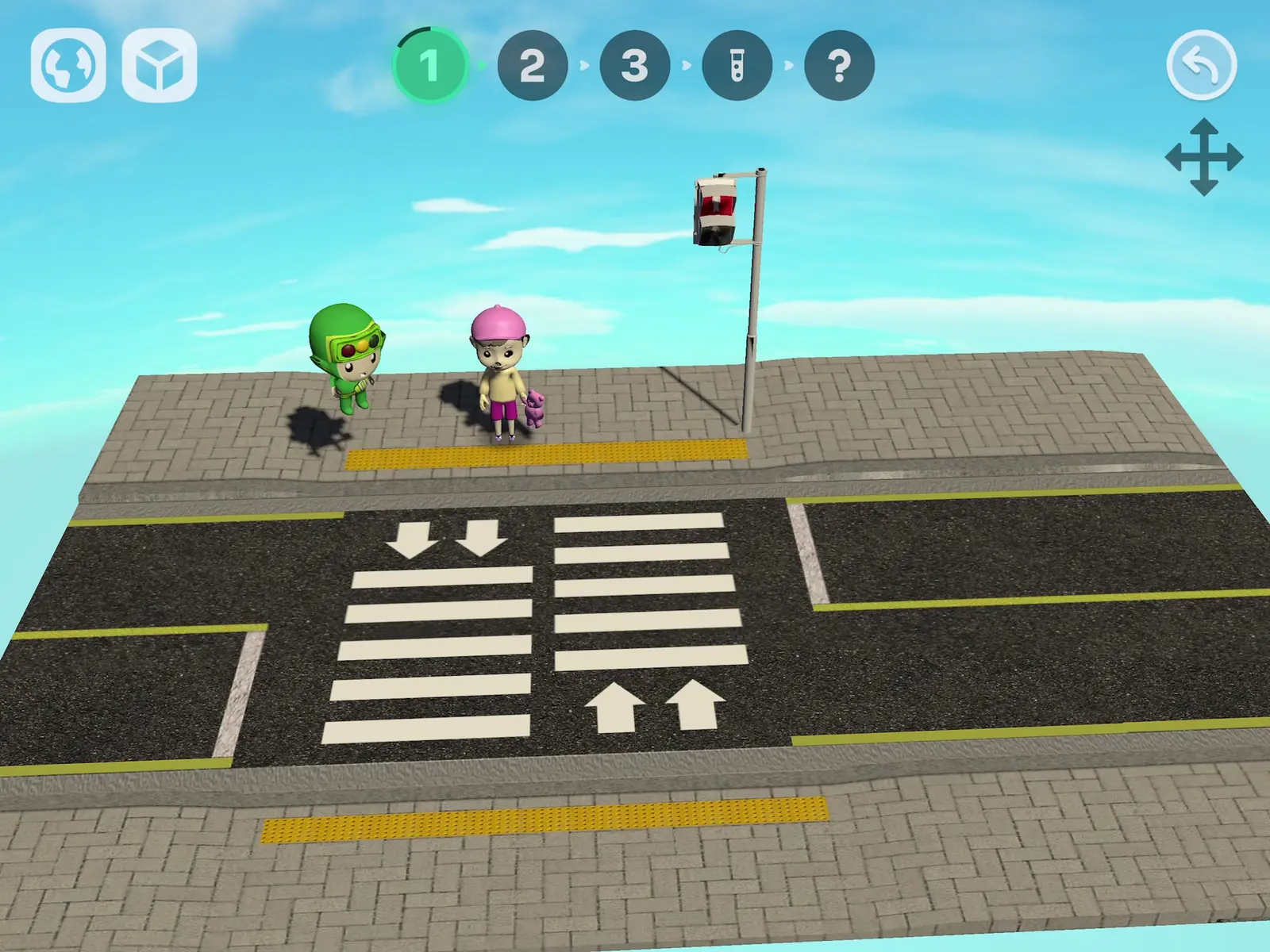
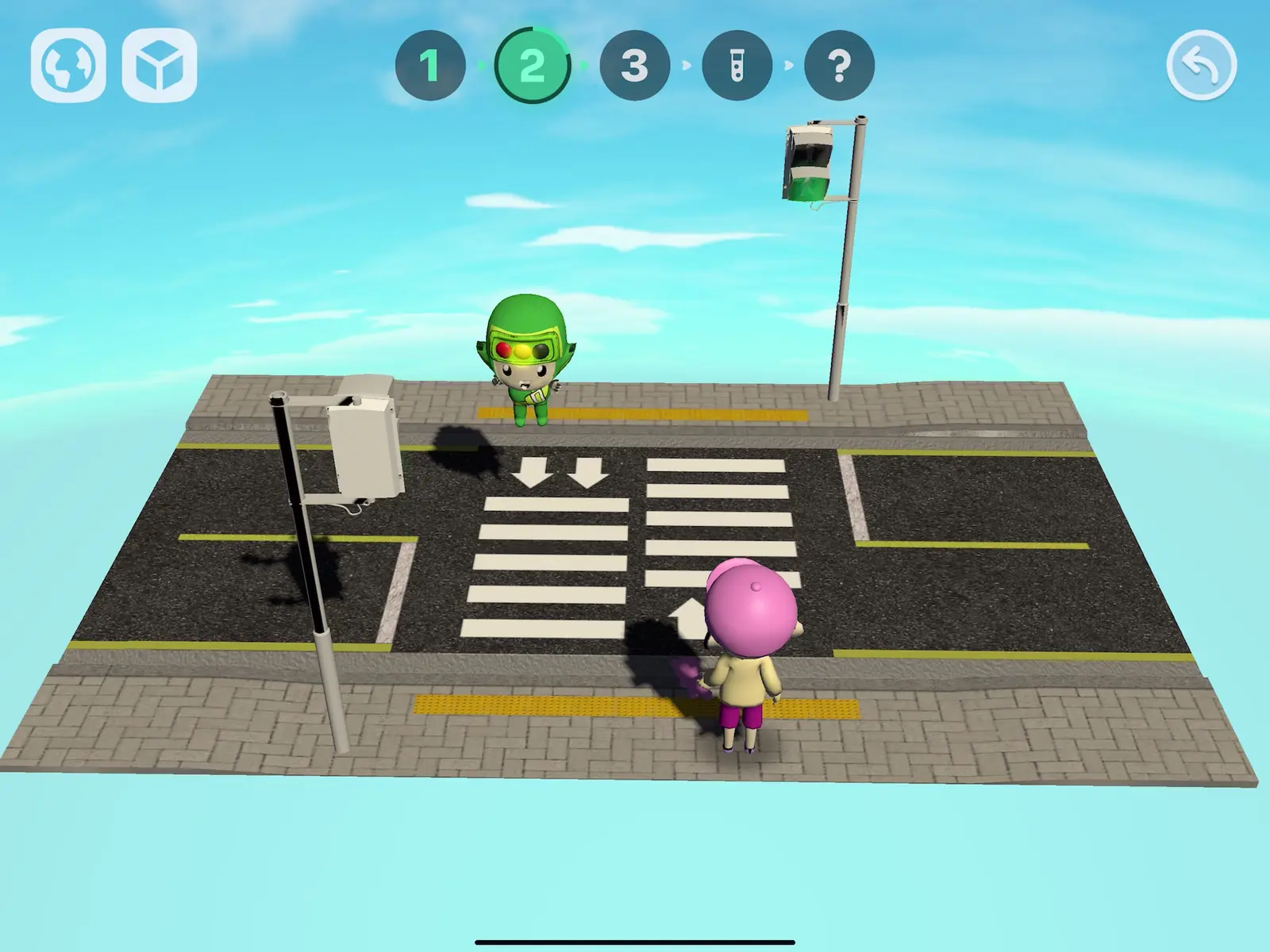
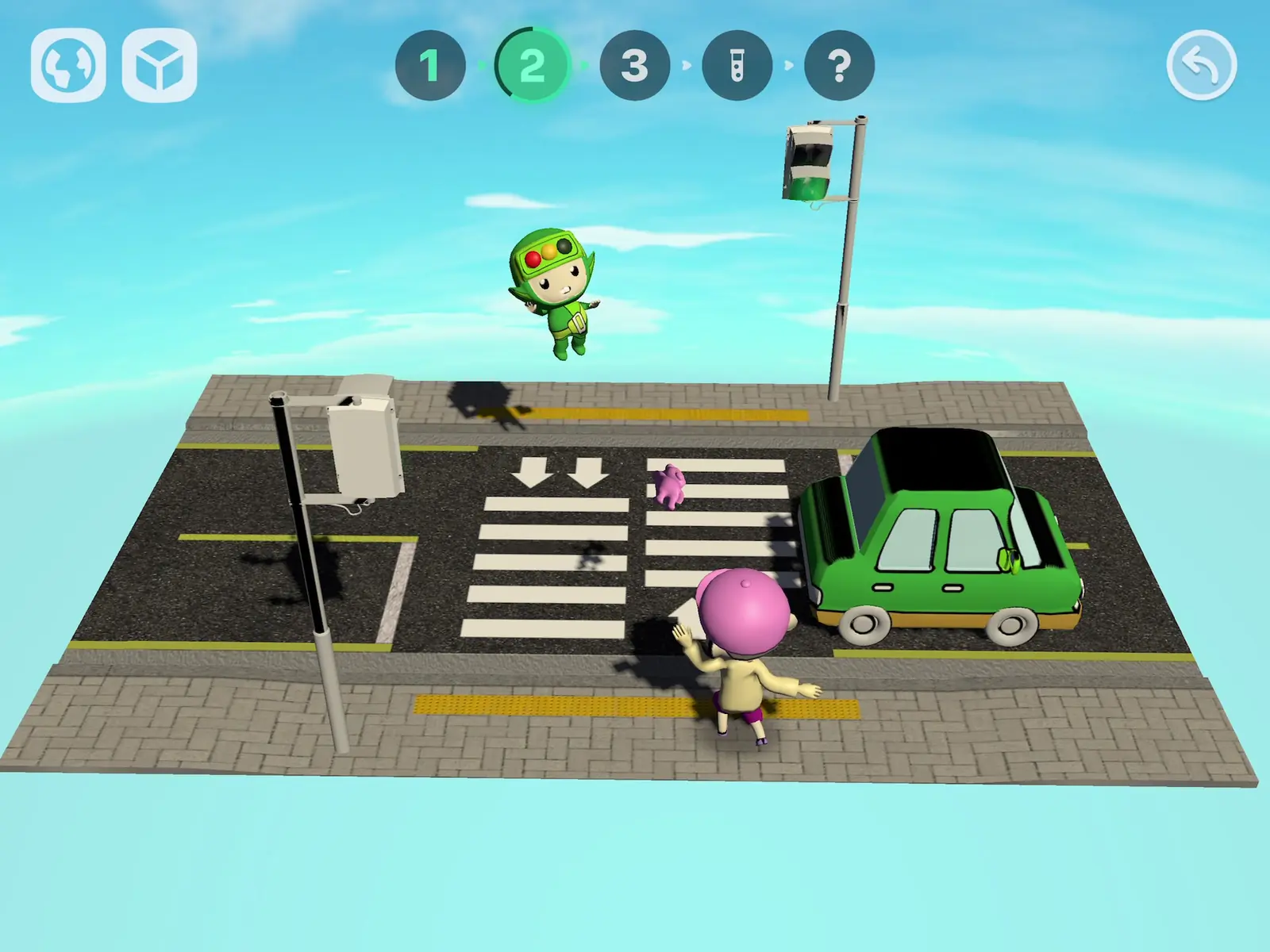
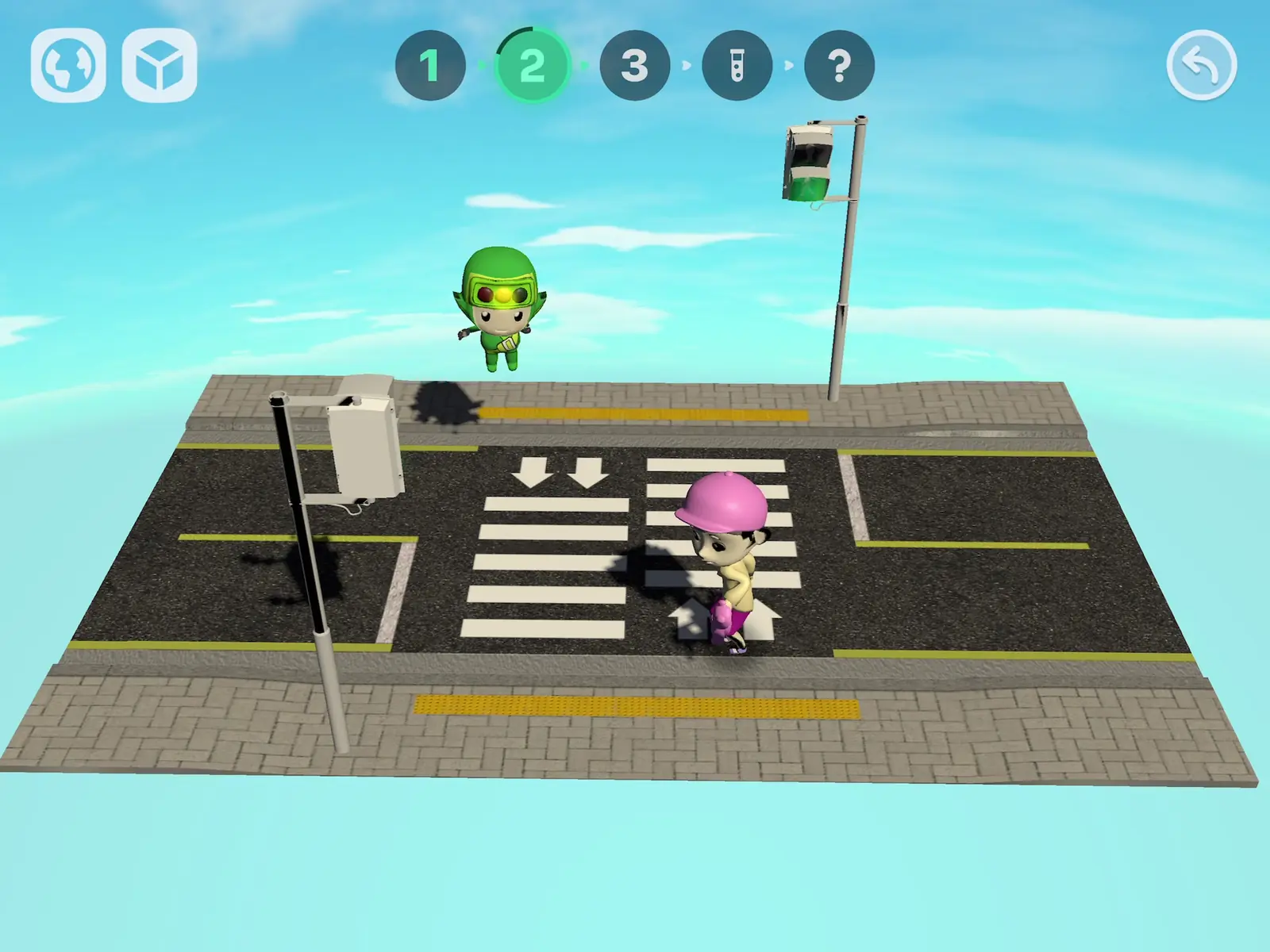
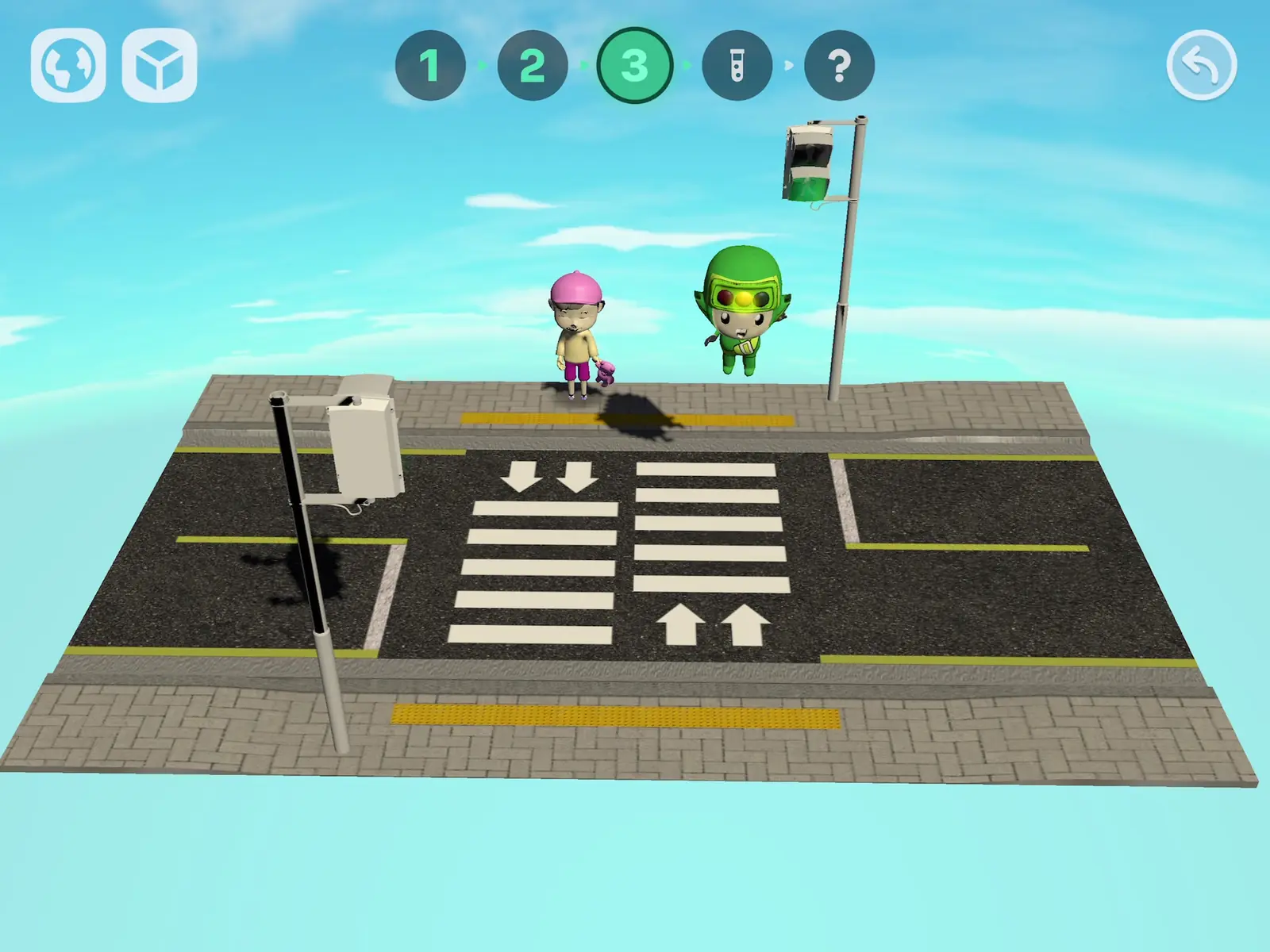
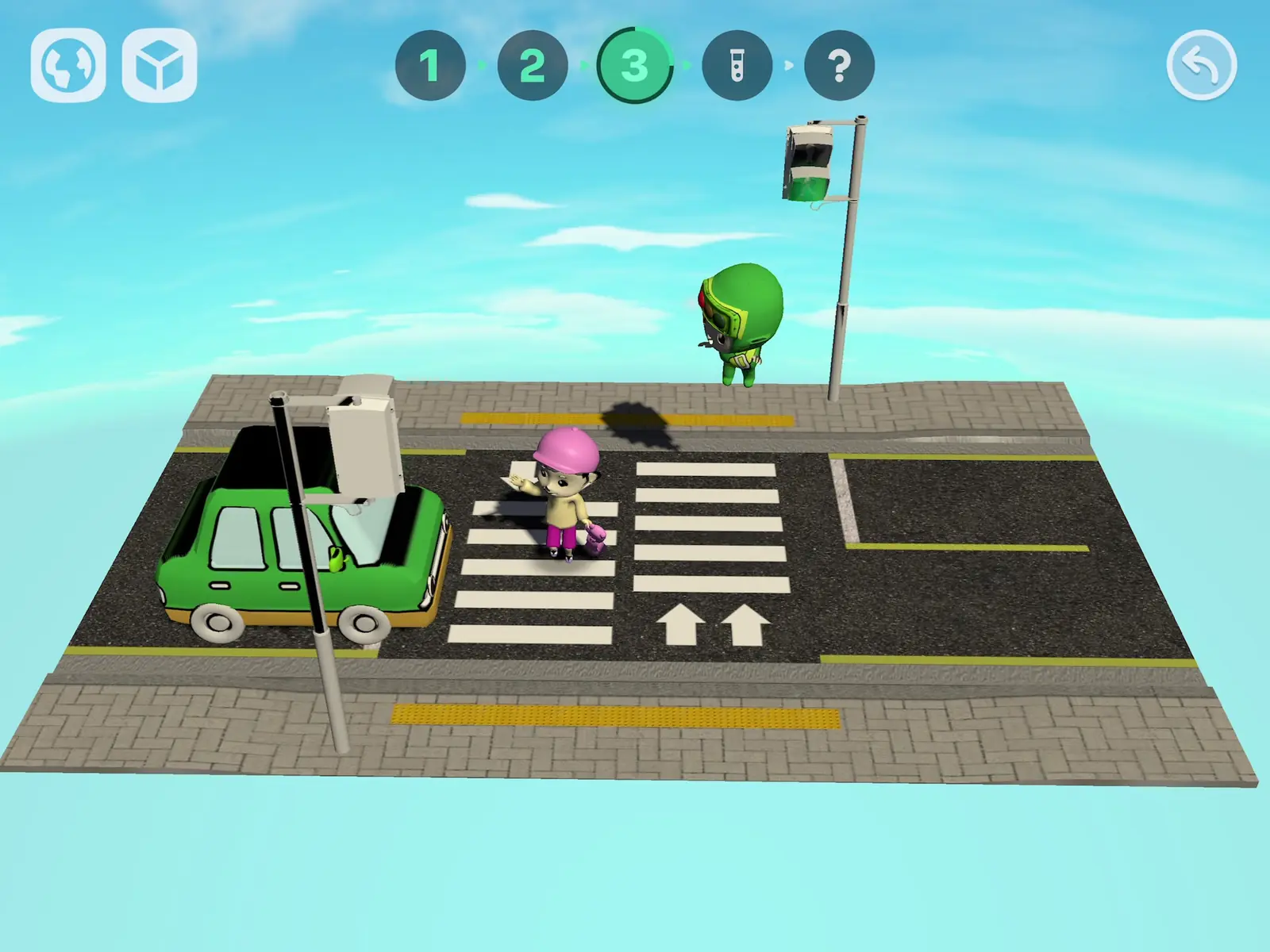
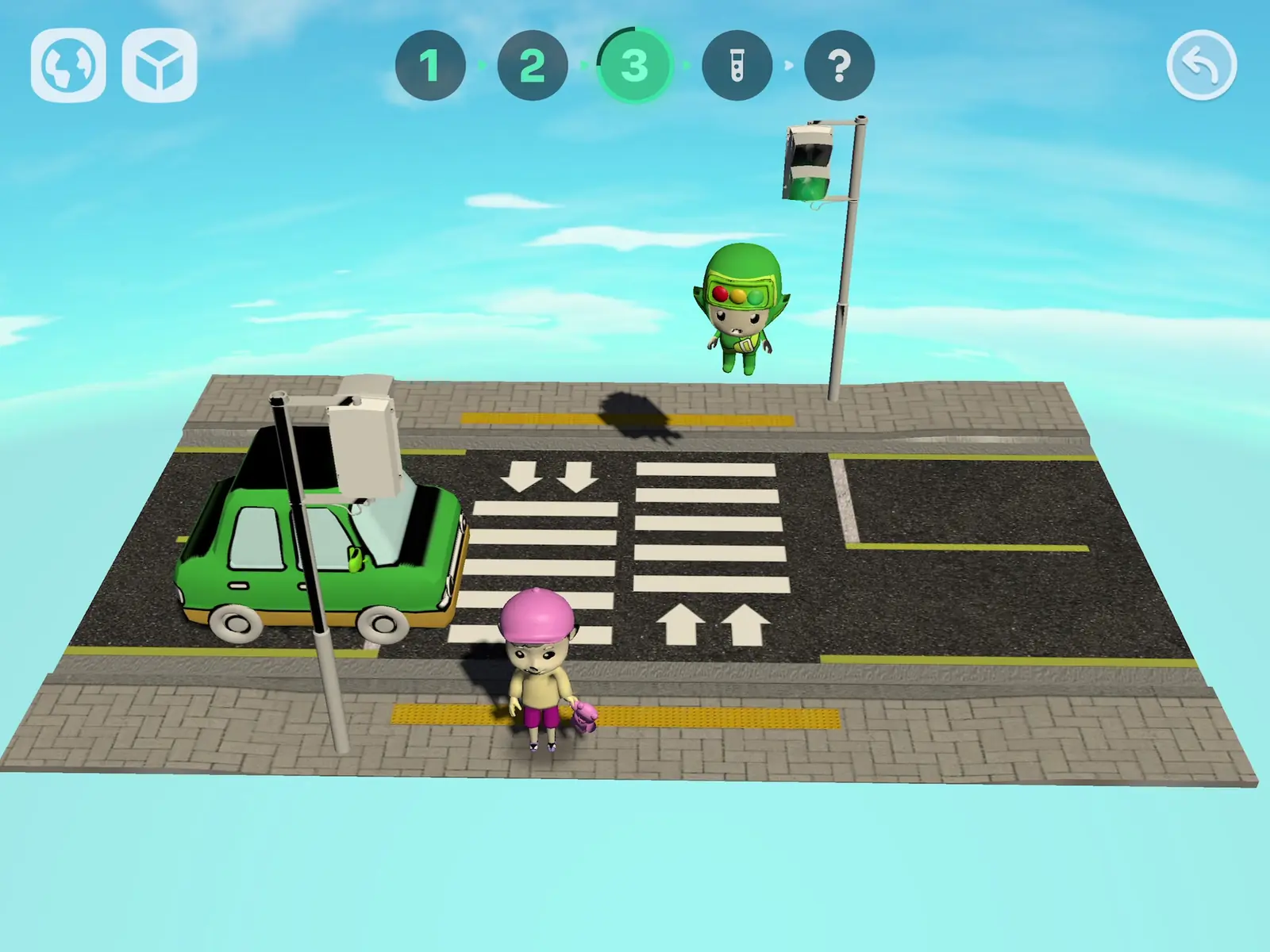
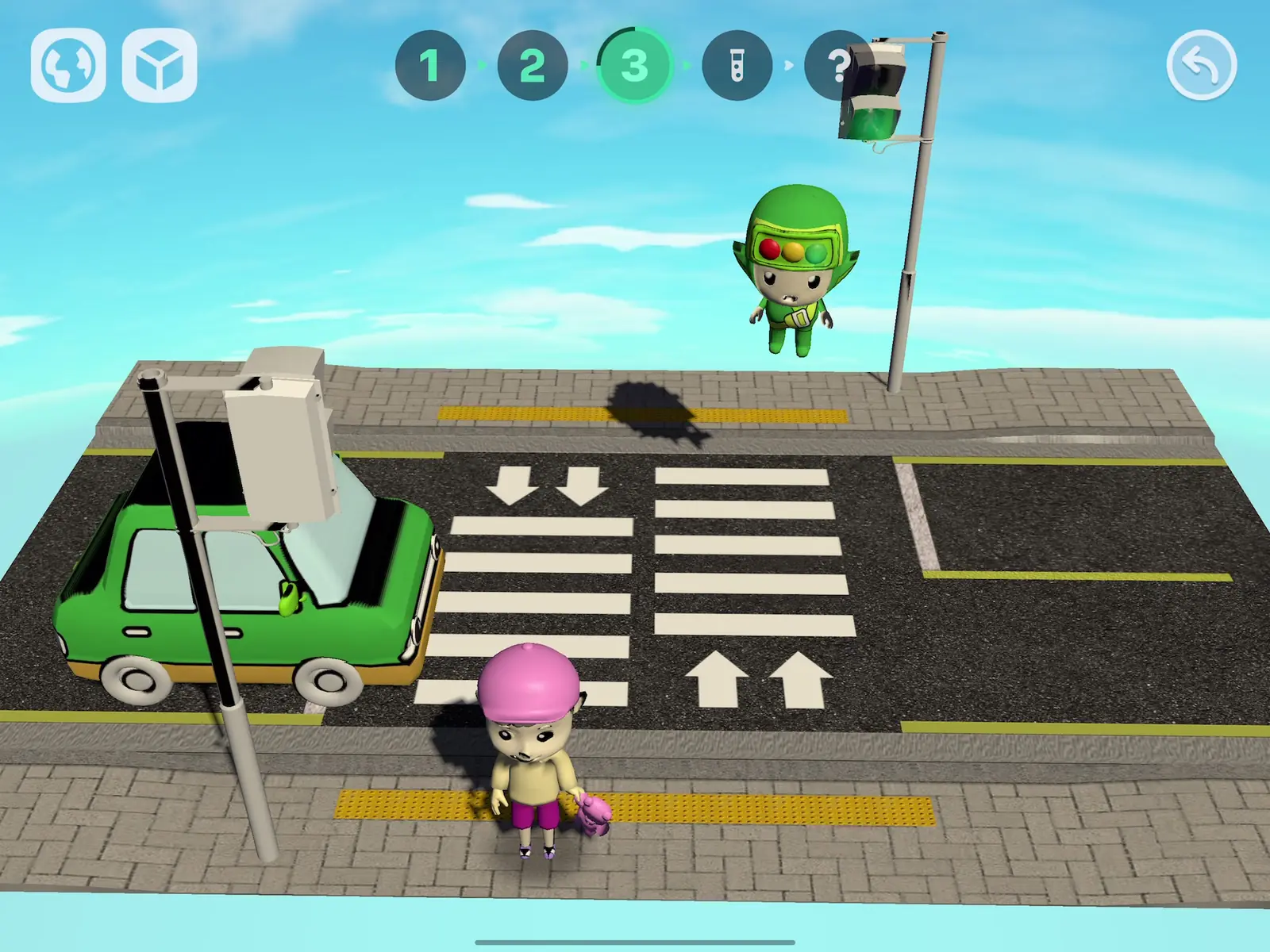
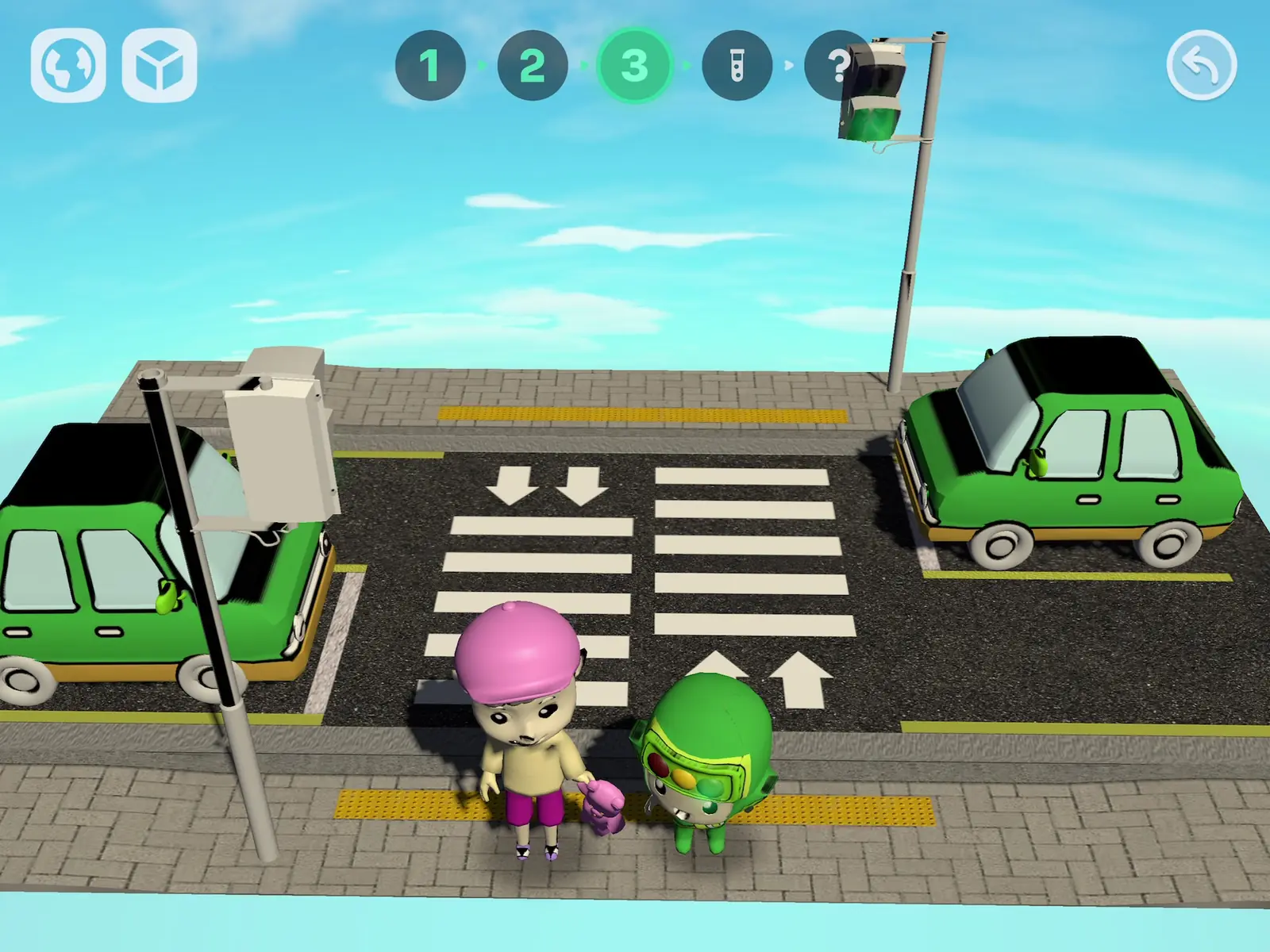
← Swipe to see more
Want to practice crossing a crosswalk safely yourself?
WAGZAK JUMP — Jump into the world

Frequently Asked Questions
Q. Can I cross as soon as the green light turns on?
No. Even when the green light comes on, first check with your own eyes that the cars on both sides have completely stopped, then cross. Even on a green light, a car may not have been able to stop in time. And when the green light is flashing, don't rush and run across — if you haven't started crossing yet, wait behind the yellow line for the next signal, then cross slowly.
Q. Do I really have to raise my hand when crossing a crosswalk?
Children are shorter than adults, so a driver might not see you easily. If you raise your hand high while crossing, the driver can notice that a child is crossing — making it much safer. It's not embarrassing at all; it's the smart way to keep yourself safe. While you cross, keep checking both sides and make sure the cars have fully stopped.
Q. Does everyone cross the road in a different way?
Yes, each person crosses using the method that works best for them. A friend who has difficulty seeing uses an audible traffic signal that announces when it's safe, or gets help from a guide dog or a person nearby. A friend who has difficulty hearing watches the traffic light and checks the movements of cars more carefully. A friend in a wheelchair or an adult pushing a stroller also checks that the cars have fully stopped before crossing slowly. Even if the way is different, everyone can cross safely. When a friend is crossing, wait quietly so the audible signal can be heard clearly, and help each other out if needed.
See you next time with another fun lesson story. — Didi