
How volcanoes erupt for kids: when a child asks, “Why does it erupt?”
Four things to know about volcanoes
- ✓Magma is molten rock deep underground
- ✓Magma is called lava when it reaches the surface
- ✓An eruption can also release volcanic gas, ash and rocks
- ✓Basalt can form from lava cooling quickly at the surface; granite can form from magma cooling slowly underground
Start exploring how volcanoes erupt for kids with a free volcano worksheet: download and print the magic paper or display it on a screen.
Nice to meet you, I'm Didi from Circus Company.
When a child asks, “Why does a volcano erupt?” I sometimes get stuck after saying it's hot underground. Where do we go from there?
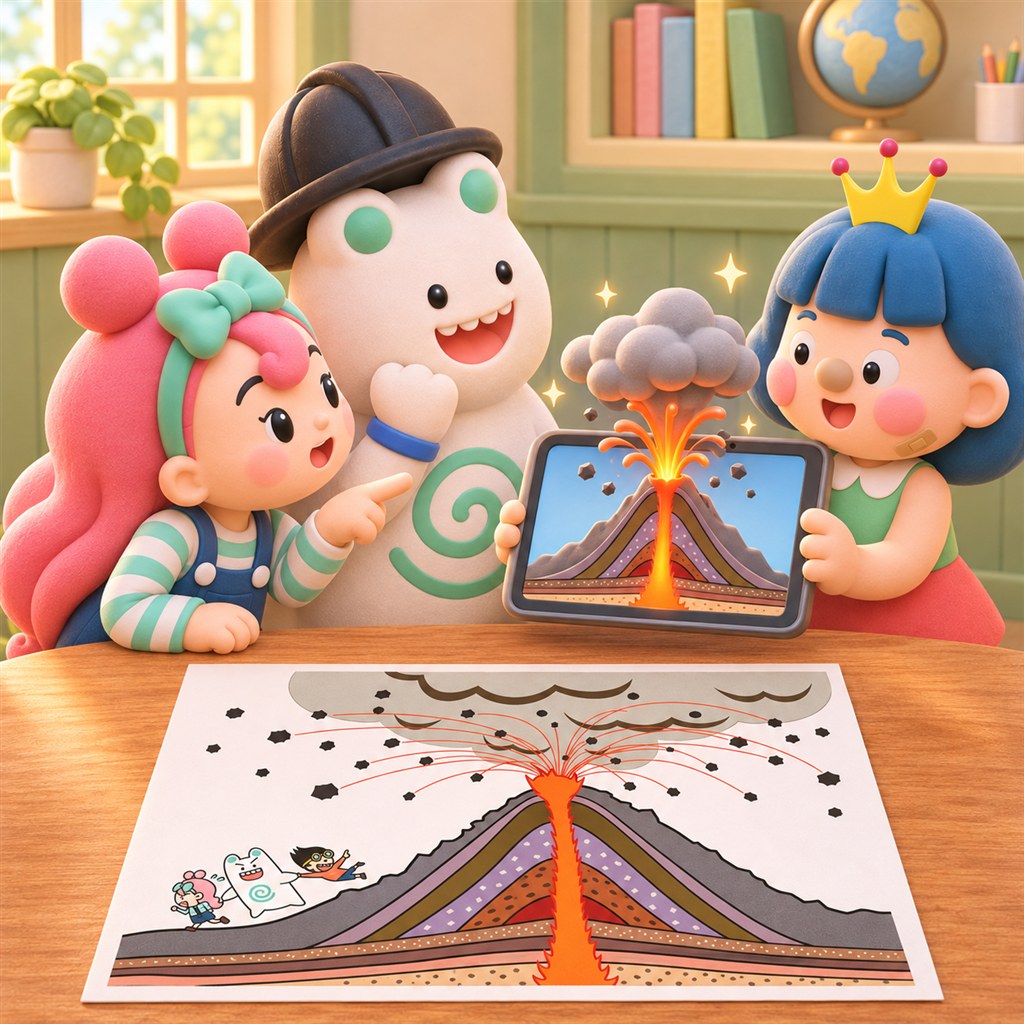
I brought out the WAGZAK RUN “Bubbling Volcano Eruption” magic paper. Point the app at it and ta-da! Then we can talk about what we see. Come explore with me!
How volcanoes erupt for kids: four steps from underground to the surface
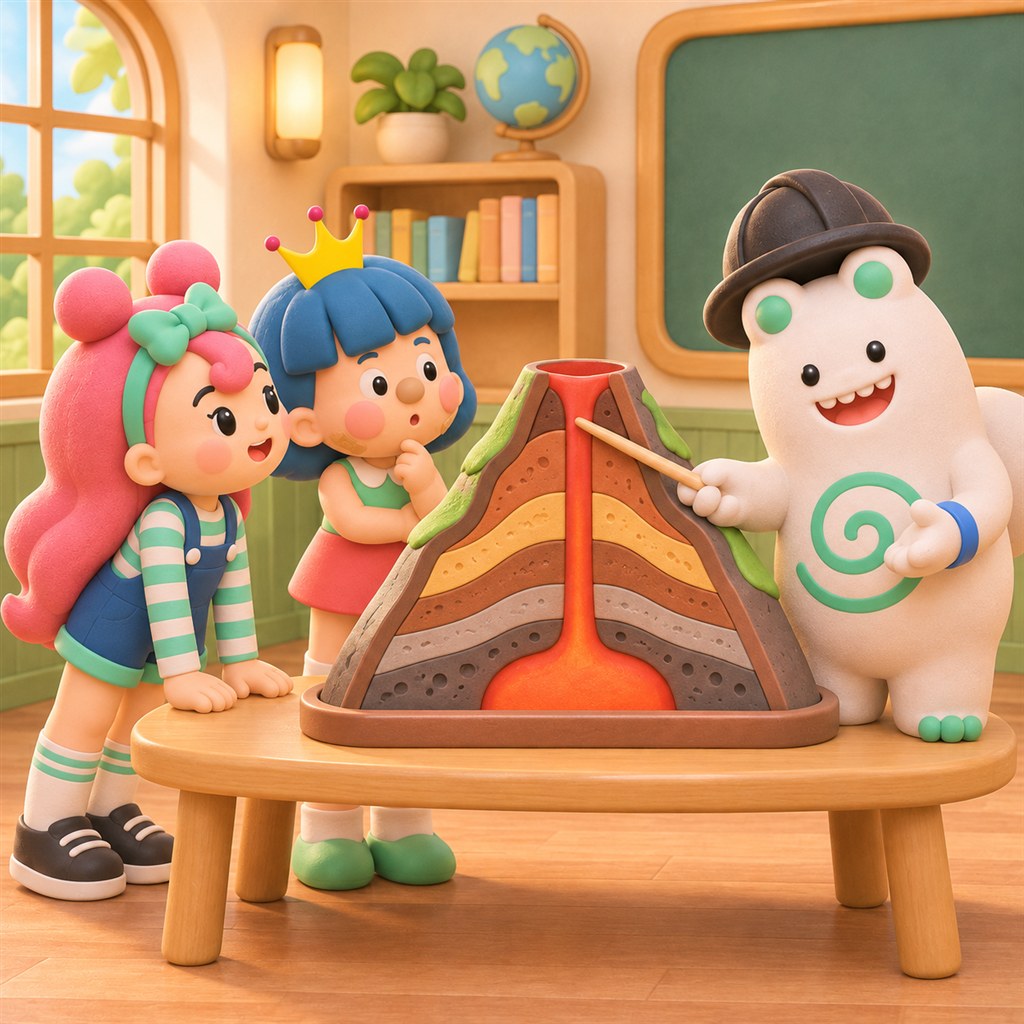
- Magma: molten rock underground is magma. It can rise through cracks.
- Lava: magma at the surface is lava. Teacher Popo describes it as “a hot liquid that flows like melted chocolate.”
- Eruption materials: volcanoes can release lava, gas, ash made of tiny particles, and rocks of different sizes. Wind can carry ash far away, where it may fall like rain.
- Rock after cooling: basalt forms when lava cools quickly at the surface. It's dark, and some has holes left by escaping gas. Granite forms when magma cools slowly underground. It's usually light with large grains.
Looking at volcanoes on screen: what research tells us
- Augmented reality: an analysis of 61 studies of augmented reality in education found a moderate positive effect on learning (d = .64). (Garzón et al., 2019, Virtual Reality)
The research did not examine WAGZAK RUN or focus only on volcano lessons. WAGZAK RUN magic paper is a play activity that gives us something to talk about as we look at the screen together.
A sheet of magic paper, and up comes the lava
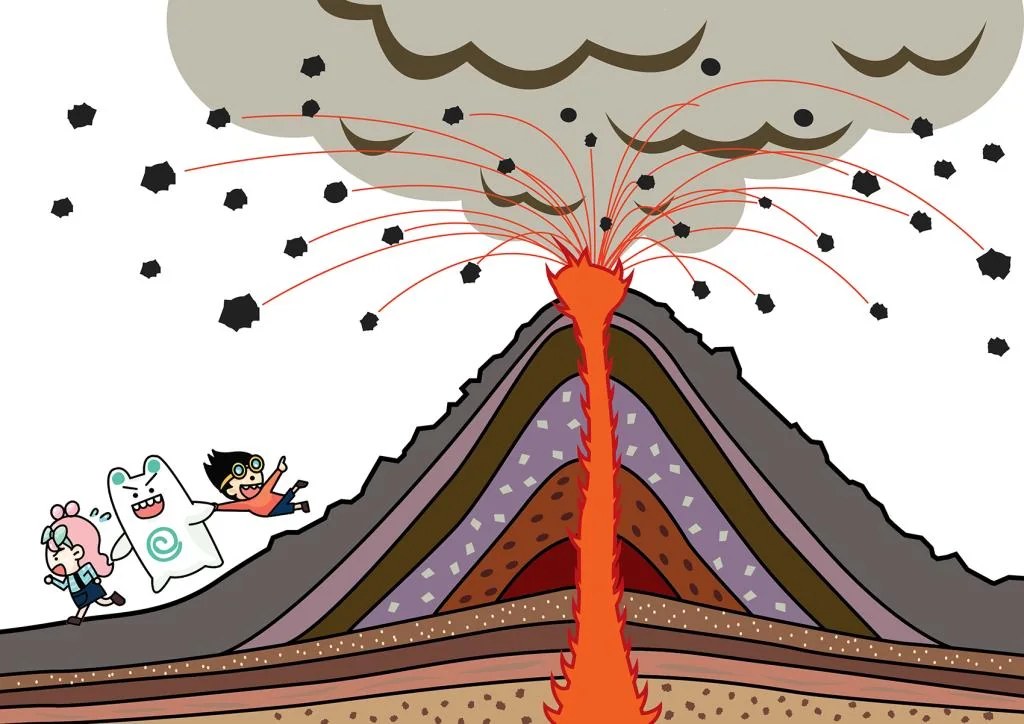
Get the “Bubbling Volcano Eruption” magic paper. Its illustration shows the layers beneath a volcano, the path rising magma takes, lava at the crater and an ash cloud. Saerom, Popo and a friend are running away in surprise.
Print it or display it on a classroom TV or laptop. Open the WAGZAK RUN app and point it at the picture so the picture fills the screen.
Ta-da! Lava rises above the paper on screen. It isn't a real volcano, so take your time looking from a safe place.
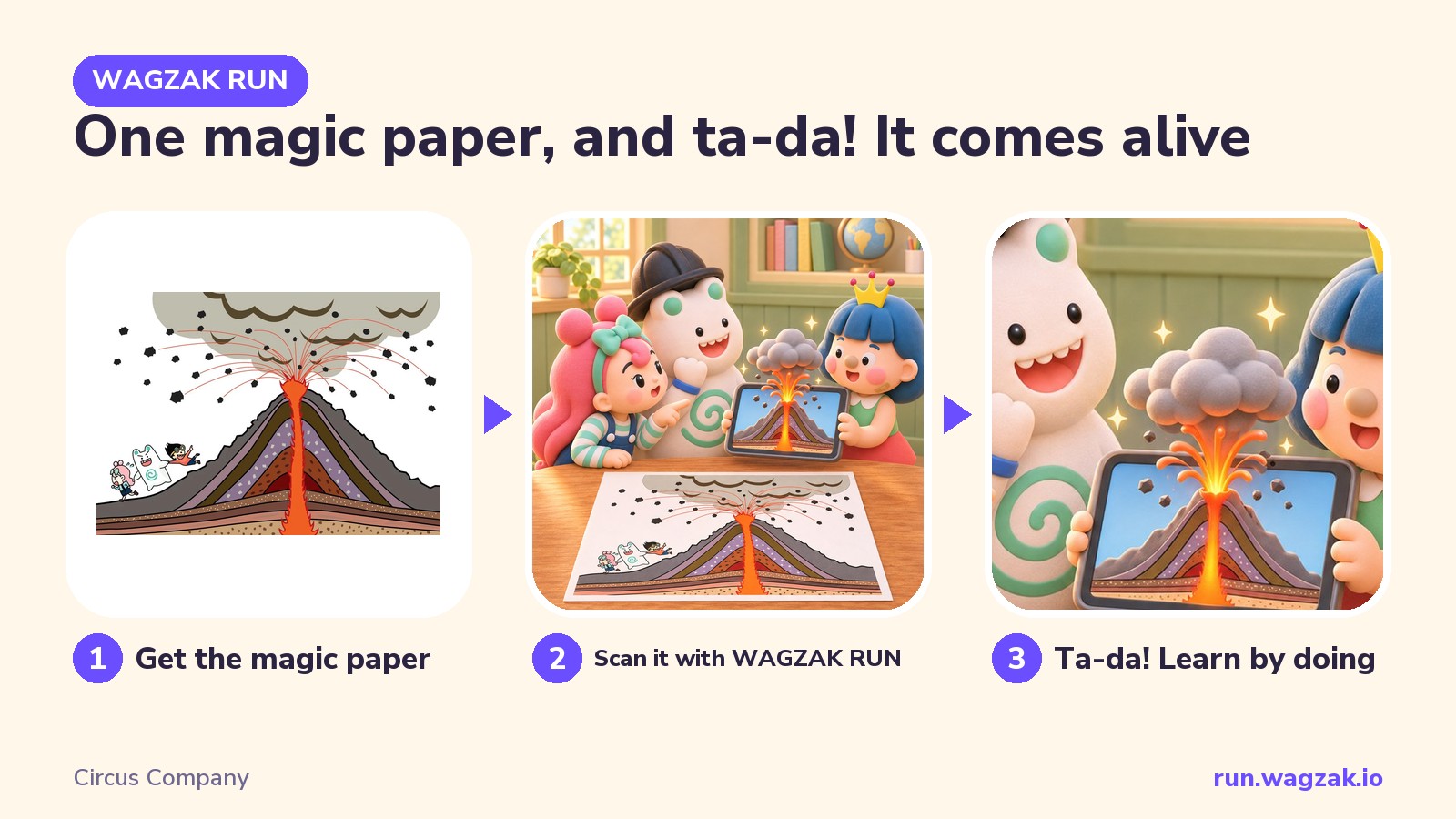
In the classroom, display the paper on a TV and take turns pointing a tablet at it. At home, a printed sheet on the table works too.
Get the volcano magic paper
Questions to ask after the lava rises
The pictures below are illustrations from Didi's story, not app screens. Look together and ask one question at a time. Instead of answering immediately, try “What makes you think that?”
“Does only lava come out of a volcano?” No. Volcanic gas, ash and rocks of different sizes can come out too. Look for the dark rocks flying into the sky in the paper's illustration.
“Why are there holes in this dark rock?” They are spaces left as gas escaped while lava cooled. Some basalt has holes like these.

“What about the light rock with large grains?” It could be granite. Its grains grew as magma cooled slowly underground, and you may see sparkling specks.

More volcano activities for home and classroom
- Look for rocks on a walk: with an adult, follow a safe path and look at the stones in a stone wall. Can you spot holes or sparkling grains? Don't climb the wall or remove stones.
- Draw a volcano cross-section: draw a volcano cut in half on paper, then draw a red line showing the path magma takes upward.
- Keep a “why?” notebook: write down questions that come up while looking at the screen and explore them together later.

This activity doesn't replace science lessons. It's a way to talk together before or after a textbook lesson or a teacher's explanation.
When someone asks “Why does it erupt?”, it's fine to pause before offering an answer. Ask what they think and see where the conversation goes. Hee-hee.
Yours, Didi
About WAGZAK RUN
WAGZAK RUN is an augmented reality (AR) learning-through-play app made by Circus Company. Print magic paper or display it on a screen, then point the app at it to bring the picture to life on screen. Individuals, educational institutions and businesses can choose from 51 languages and use it free with no monthly subscription fee.
Frequently asked questions
Why do volcanoes erupt?
As magma rises, gas dissolved in it forms bubbles that expand. The gas can push magma upward and cause an eruption. Not every eruption is explosive: lava can also flow out slowly.
What's the difference between magma and lava?
Both are molten rock. We call it magma underground and lava once it reaches the surface.
How can we tell basalt and granite apart?
Basalt forms when lava cools quickly at the surface and is dark; some has holes. Granite forms when magma cools slowly underground and is usually light with large grains. Color and holes alone can be misleading, so say “it might be” and investigate together.
Is the magic paper ready to use as it is?
Yes. The illustration is already prepared. Print it or display it on a TV or laptop, then open the WAGZAK RUN app on a phone or tablet and point it at the picture.
Is there a set age for the activity?
No age is specified. Explore the screen together with an adult and try drawing a volcano cross-section too.
Ready to ask today's volcano question?
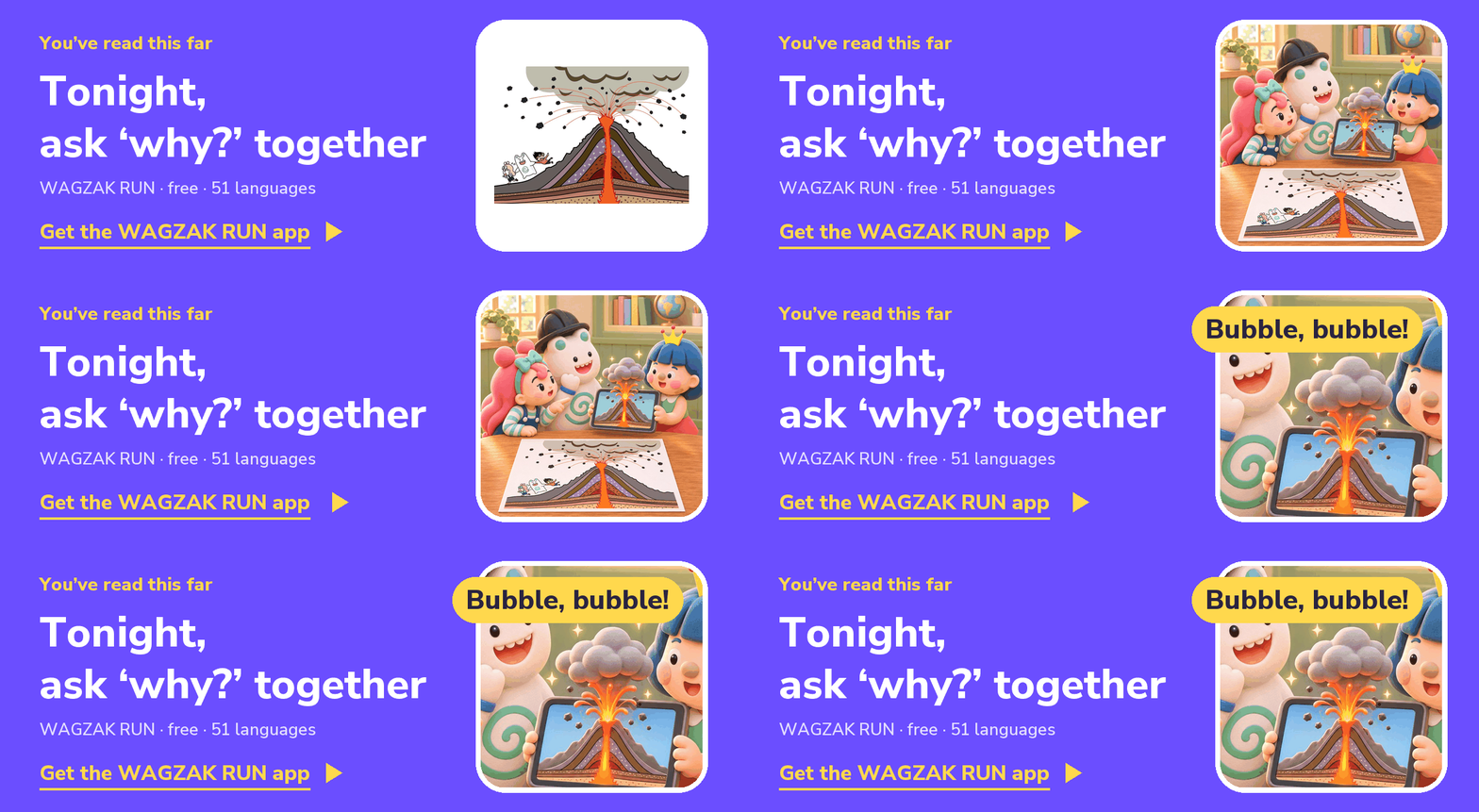
Getting started takes three steps.
- Get the magic paper: Download Bubbling Volcano Eruption. It's free to download, with no sign-up.
- Get WAGZAK RUN: Download the app and choose from 51 languages. There is no monthly subscription fee.
- Point and discover: fill the screen with the picture. New to it? See how to use it.
- WAGZAK RUN · Circus Company · free with no monthly subscription fee · 51 languages · https://app.wagzak.io/en/