
Planets in order for kids: which one is the biggest?
Four things to know about the solar system
- ✓The Sun is a star that gives off its own light
- ✓Eight planets orbit the Sun and reflect its light
- ✓From closest to the Sun: Mercury · Venus · Earth · Mars · Jupiter · Saturn · Uranus · Neptune
- ✓Jupiter is the largest planet and Mercury is the smallest
Explore the planets in order for kids with a friendly guessing game and a solar system worksheet free to download and print or display on a screen.
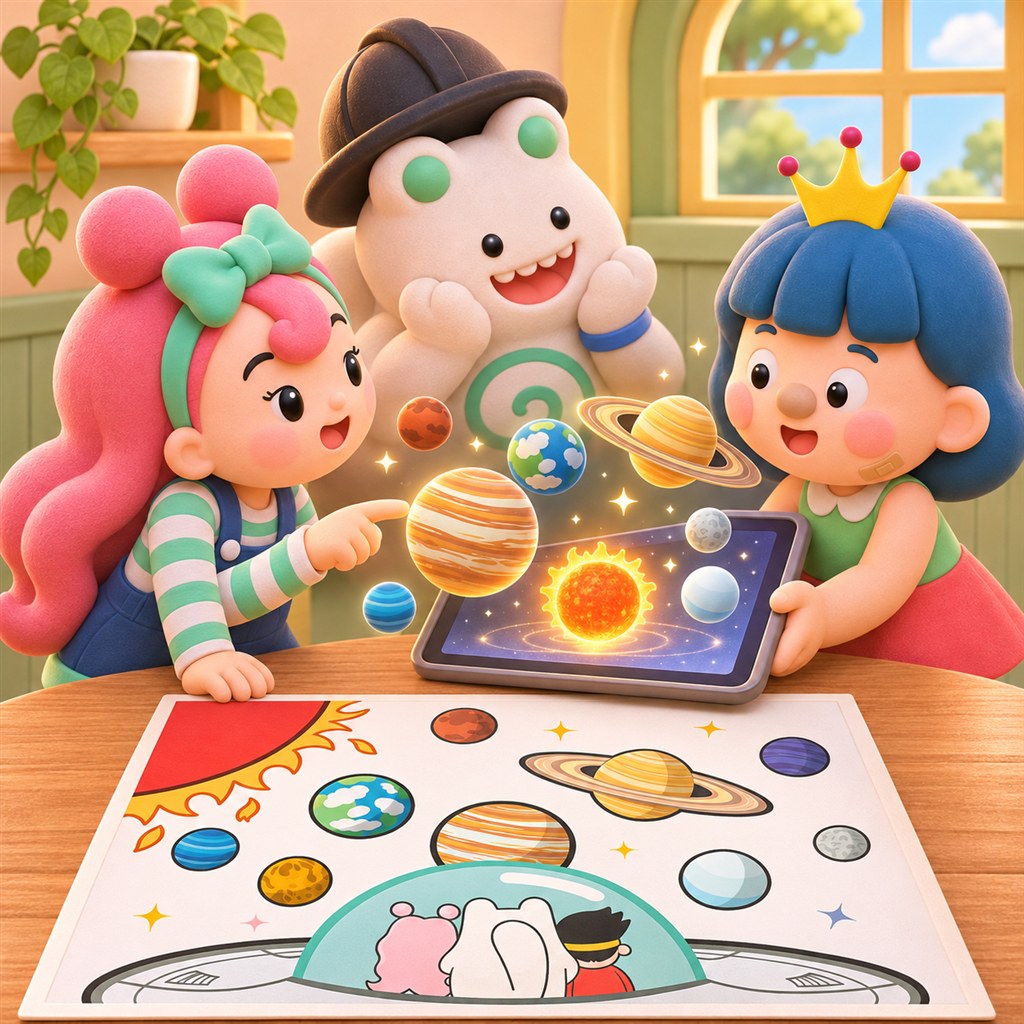
Nice to meet you, I'm Didi from Circus Company. The bandage on my cheek is my pride and joy.
“Which planet is the biggest?” That question set off a lively debate at home. I picked Earth, while my friend insisted it was Mars.
We opened the WAGZAK RUN “Solar System Journey” magic paper and pointed the app at it. Ta-da! Afterwards, we checked the planet names and answers in this article to settle our bet. Come explore with me!
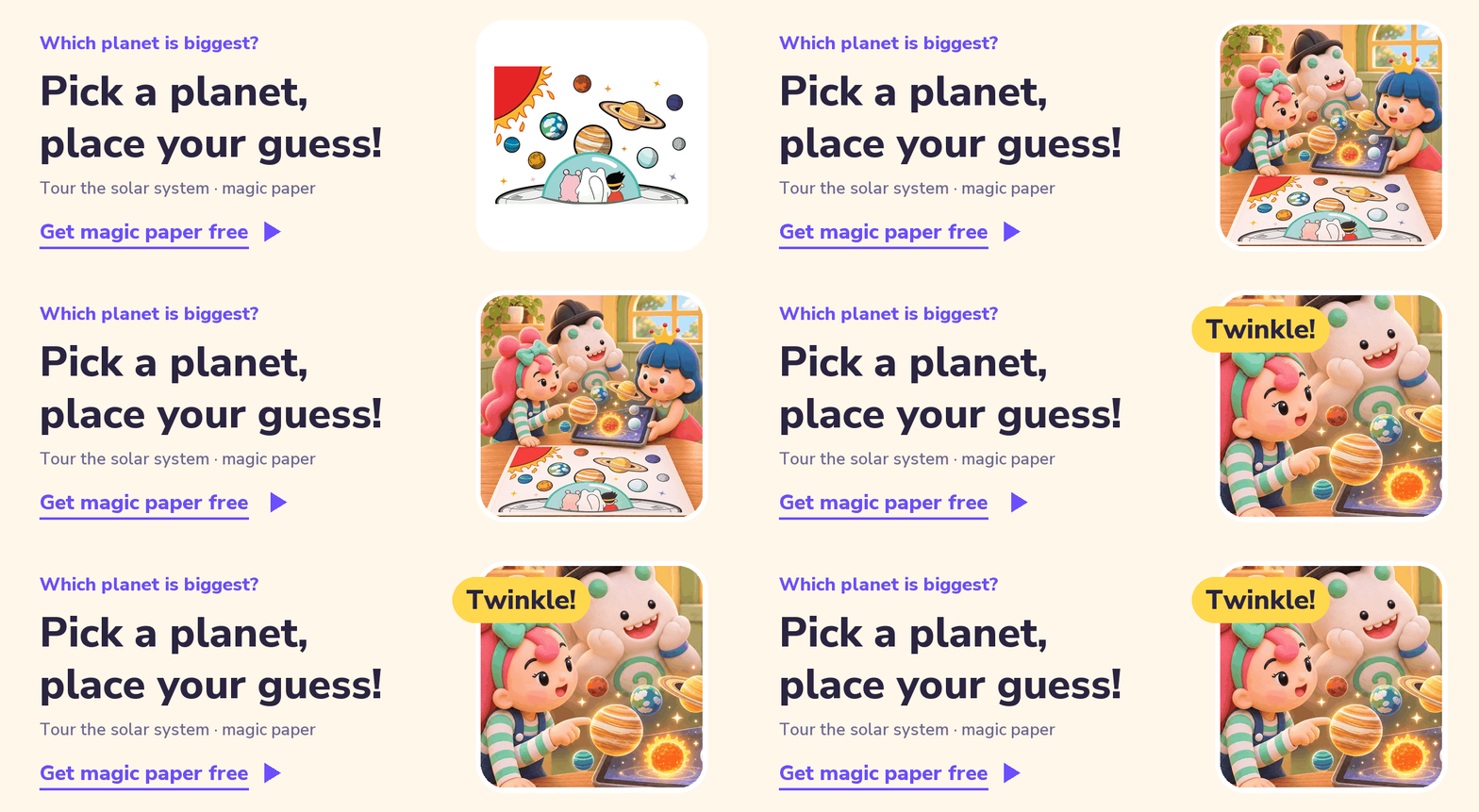
Planets in order for kids: first, stars and planets
- The Sun is a star. It gives off its own light; it is not a planet.
- Planets reflect light. Eight planets orbit the Sun and reflect its light. They don't give off their own light. Some look like stars at night. Asteroids and comets also orbit the Sun but aren't planets.
- Eight in order. From the Sun: Mercury, Venus, Earth, Mars, Jupiter, Saturn, Uranus and Neptune.
- Two groups. Mercury, Venus, Earth and Mars are mostly rocky terrestrial planets. Jupiter, Saturn, Uranus and Neptune are much larger Jovian planets.
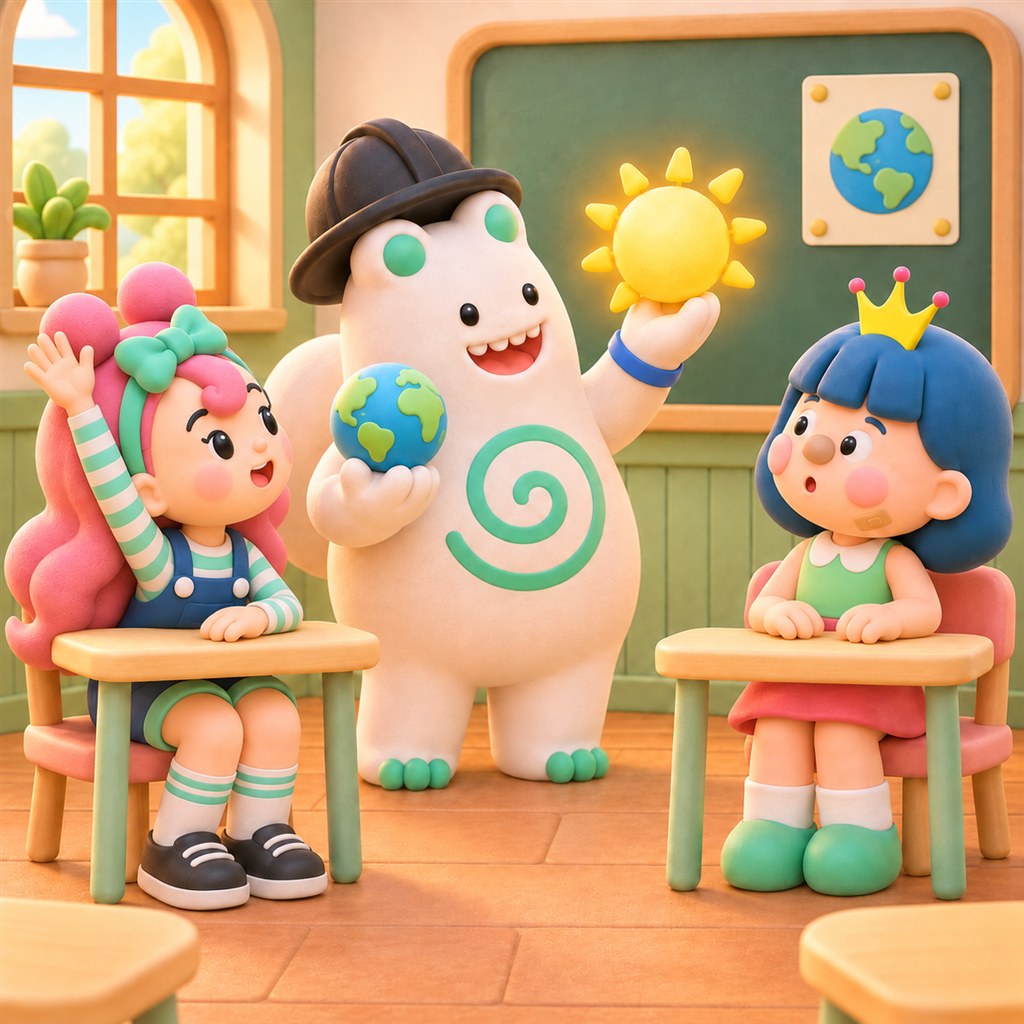
A look at research on screens and space
- Augmented reality: An analysis of 61 studies of augmented reality in education found a moderate positive effect on learning (d = .64). (Garzón et al., 2019, Virtual Reality)
This research did not study WAGZAK RUN or focus only on solar system lessons. The magic paper offers a way to play and talk together while looking at the screen.
A solar system journey on magic paper
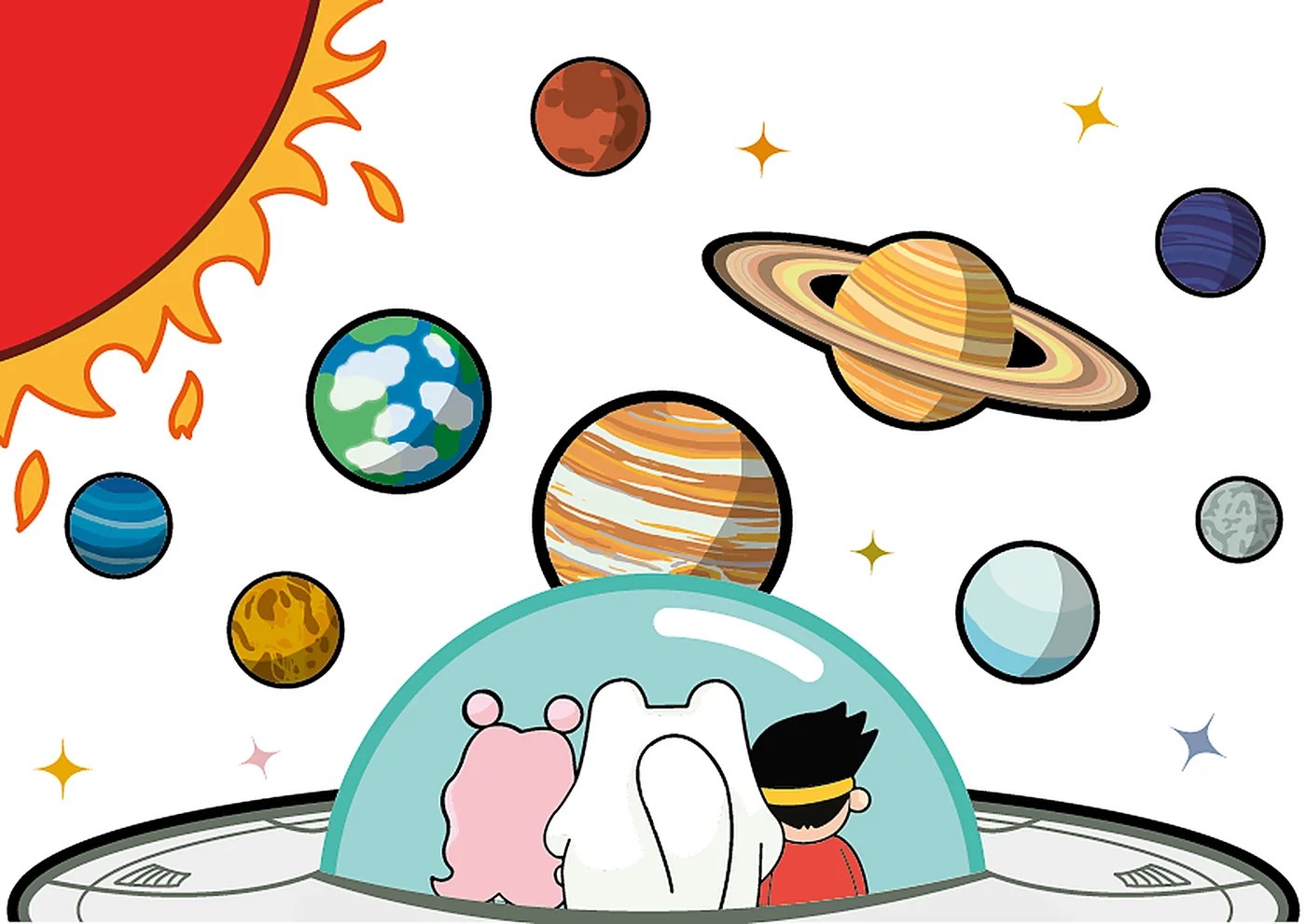
Get the “Solar System Journey” magic paper. The picture is ready to use. It shows a blazing Sun, several planets, Saturn with its rings, and Saerom, Popo and a friend looking into space through a round spaceship window.
Print it or display the picture on a classroom TV or laptop. Open WAGZAK RUN and point the app at the picture so it fills the screen.
Ta-da! The picture comes alive on screen. Afterwards, check the planet names and answers in this article together.
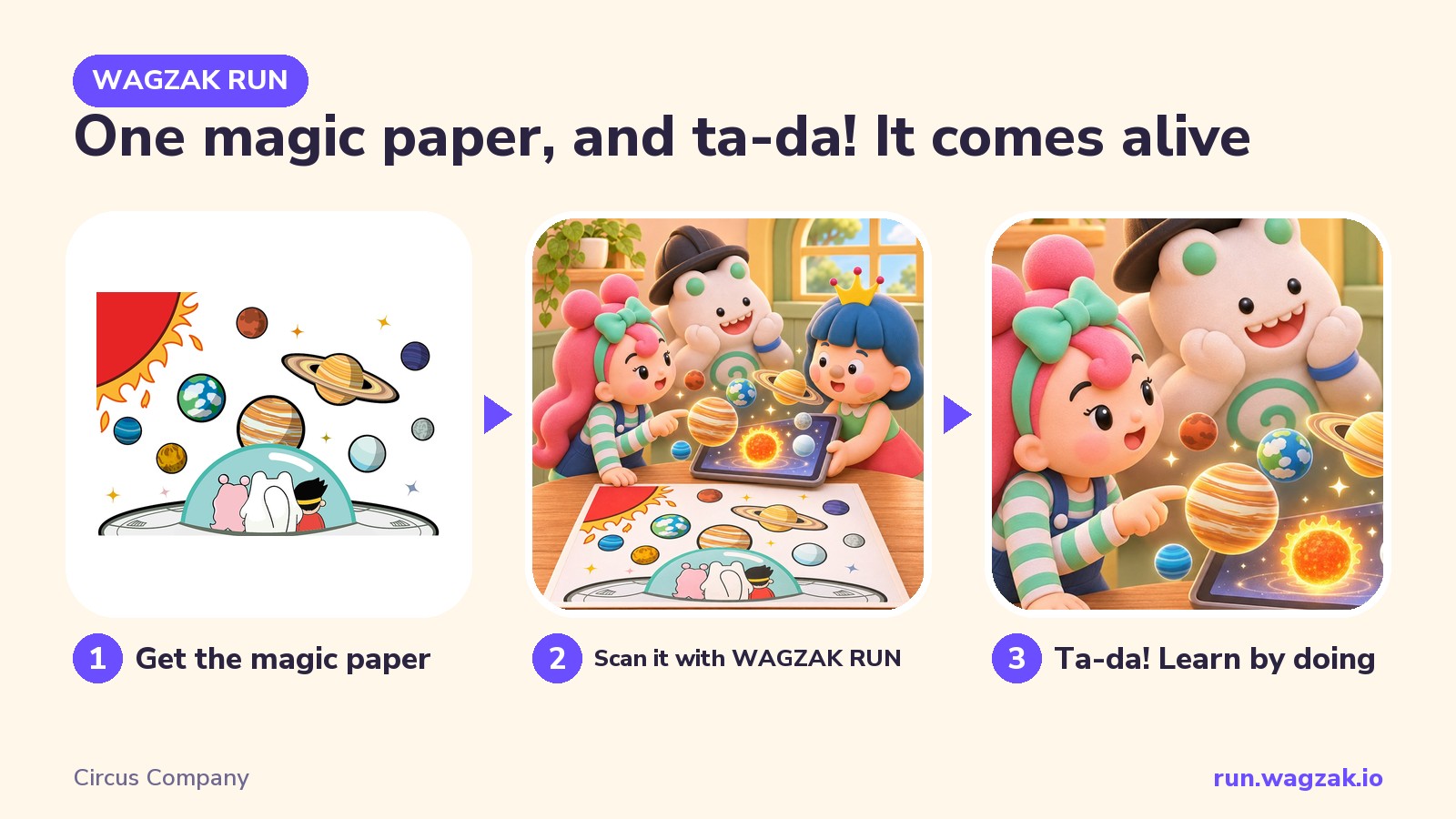
In the classroom, display the picture on a TV and take turns pointing a tablet at it. At home, place a printed sheet on the table.
Get this magic paper
Ready to settle the planet bet?
The pictures below are illustrations from Didi's story, not app screenshots. Look at them together and ask:
“Is the Sun a planet too?” No. The Sun is a star that gives off its own light. Planets orbit the Sun and reflect its light.
“Which planet has the easy-to-see rings?” In the picture, Saturn has rings. Jupiter, Uranus and Neptune have rings too, but Saturn's are especially noticeable.
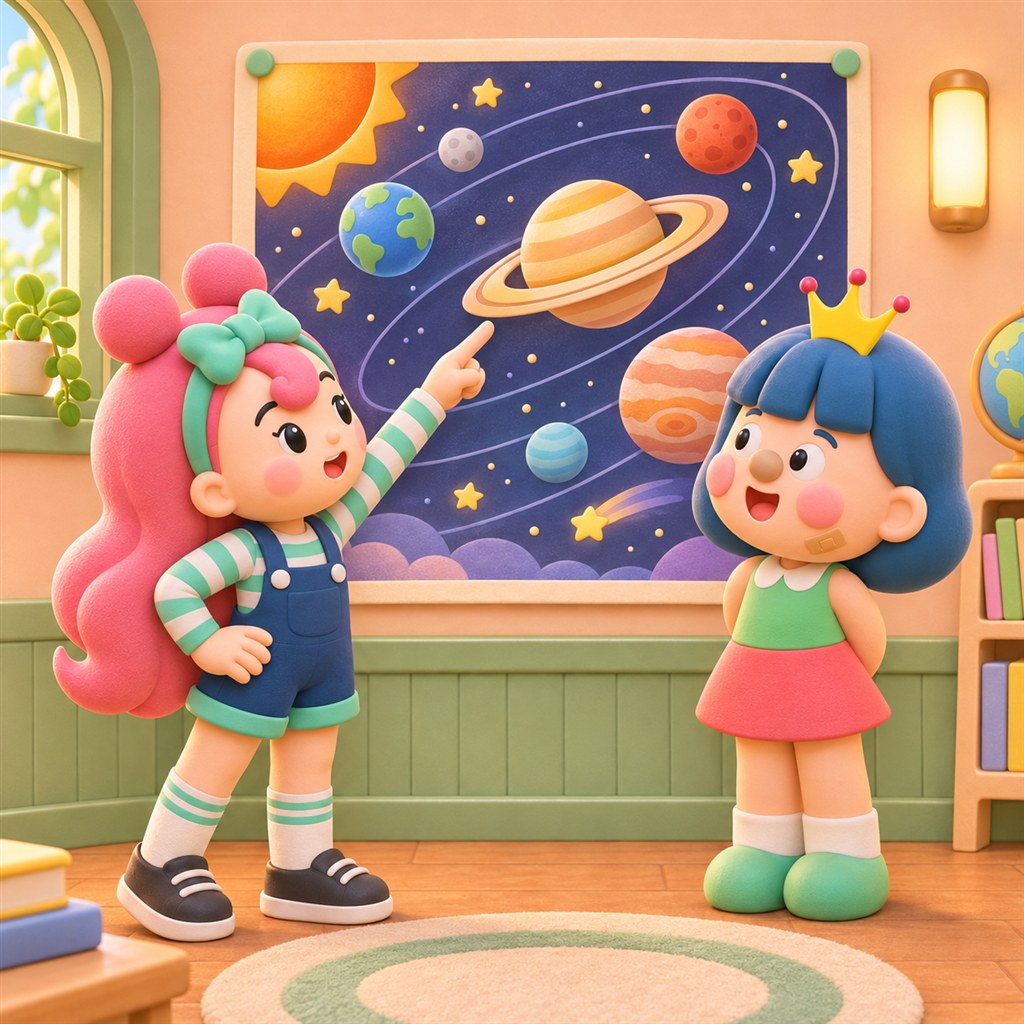
“So which planet is the biggest?” Jupiter! It's the large planet with stripes. The smallest is Mercury, the closest planet to the Sun.
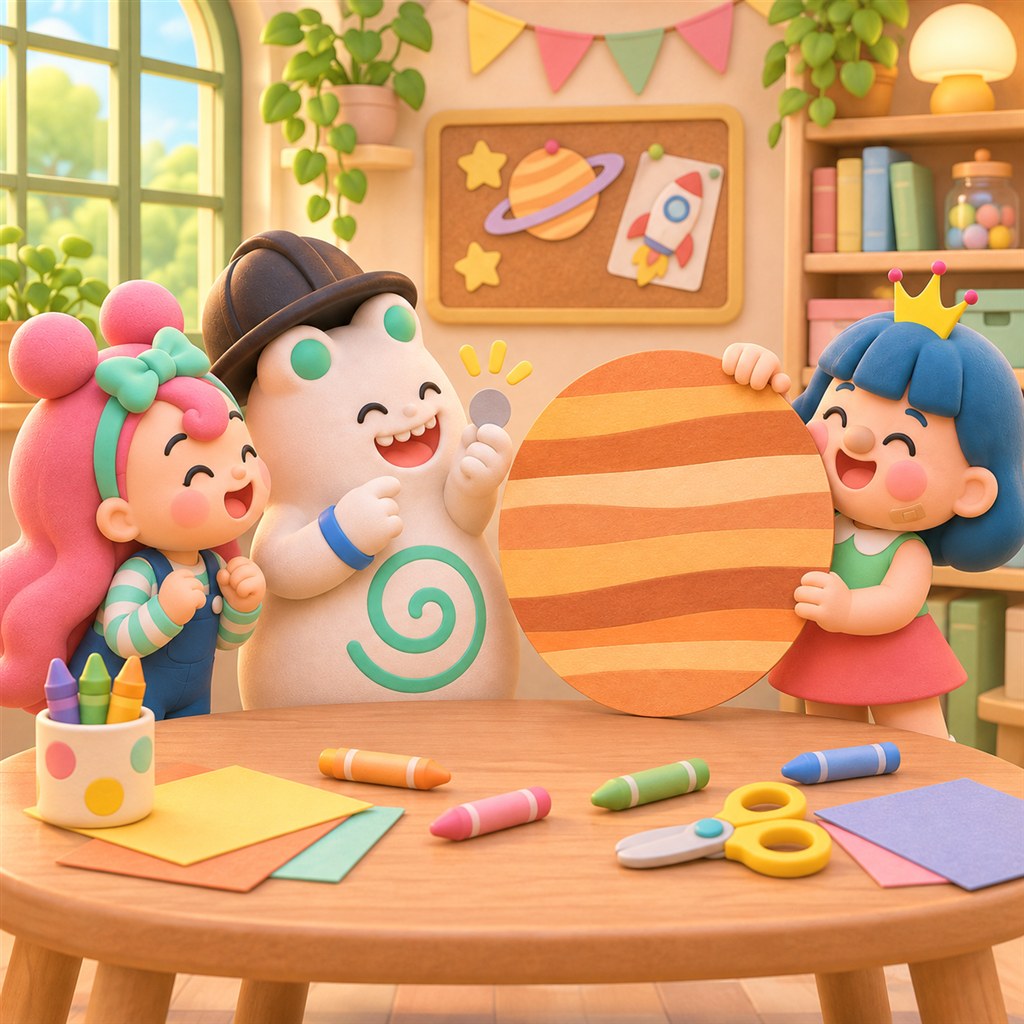
Make your own planet guessing game
- A guessing notebook. Invite your child to write questions such as “Which planet is farthest from the Sun?” or “Which planet has especially noticeable rings?” Find the answers together.
- Line up the planets. Have eight people each hold a planet name tag and line up in order from the Sun. The spaces between people do not represent the actual distances between planets.
- Sort into two groups. Put the name tags into terrestrial planets (Mercury, Venus, Earth and Mars) and Jovian planets (Jupiter, Saturn, Uranus and Neptune).
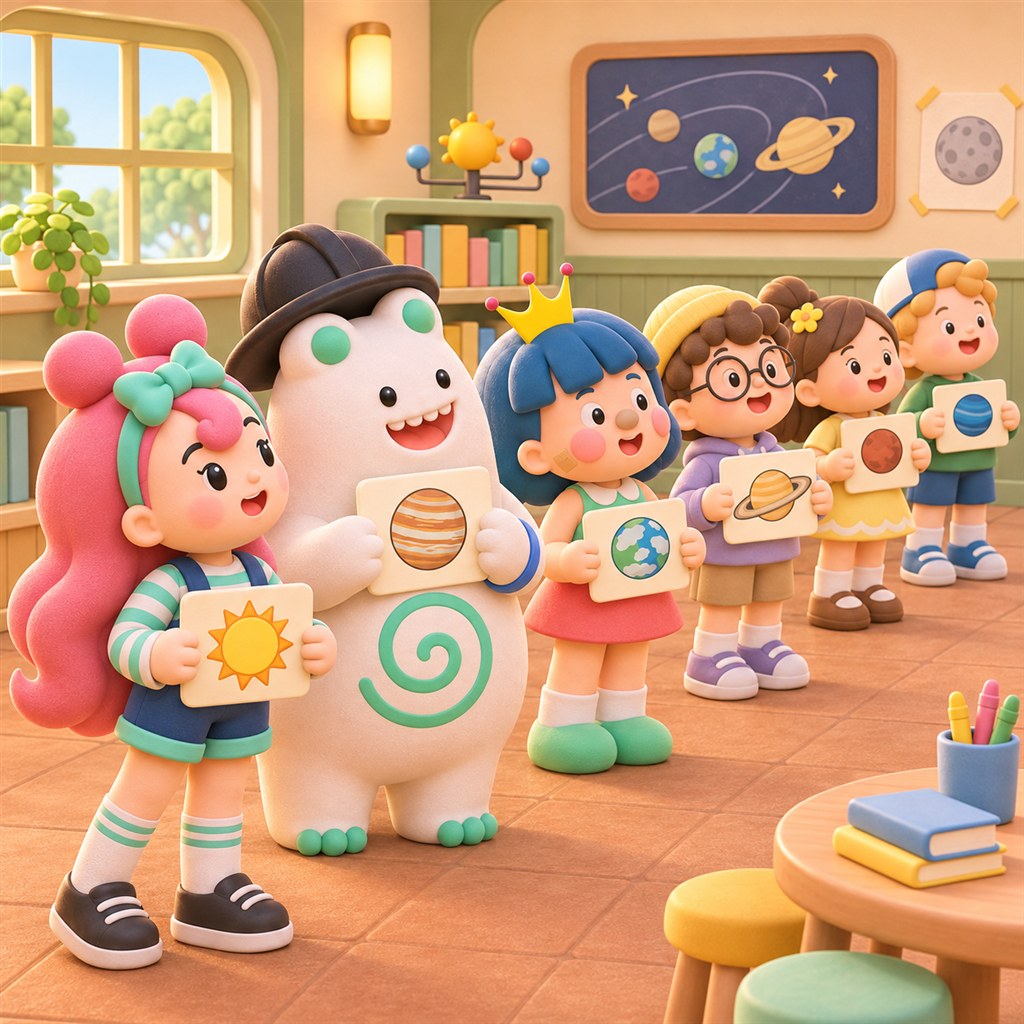
This game does not replace science lessons. It's a way to talk together before or after a textbook lesson or a teacher's explanation.
Jupiter wins today's biggest-planet bet! My Earth guess lost. Which planet will you pick next time? Hee-hee.
Yours, Didi
About WAGZAK RUN
WAGZAK RUN is an augmented reality learning-through-play app made by Circus Company. Print magic paper or display it on a screen, then point the app at it to bring the picture to life. Individuals, educational institutions and businesses can use it free of monthly subscription fees, choosing from 51 languages.
Frequently asked questions
What is the order of the planets in the solar system?
From closest to the Sun: Mercury, Venus, Earth, Mars, Jupiter, Saturn, Uranus and Neptune.
What are the largest and smallest planets in the solar system?
Jupiter is the largest and Mercury is the smallest. Earth is between them in size.
How are stars and planets different?
A star such as the Sun gives off its own light. The eight planets in our solar system orbit the Sun and reflect its light.
Is the magic paper ready to use?
Yes. Print it or display it on a TV or laptop, then open WAGZAK RUN on a phone or tablet and point it at the picture.
Is there a set age?
No age is specified. Look at the magic paper with an adult and make up guessing questions together.
Who will win tonight's planet bet?
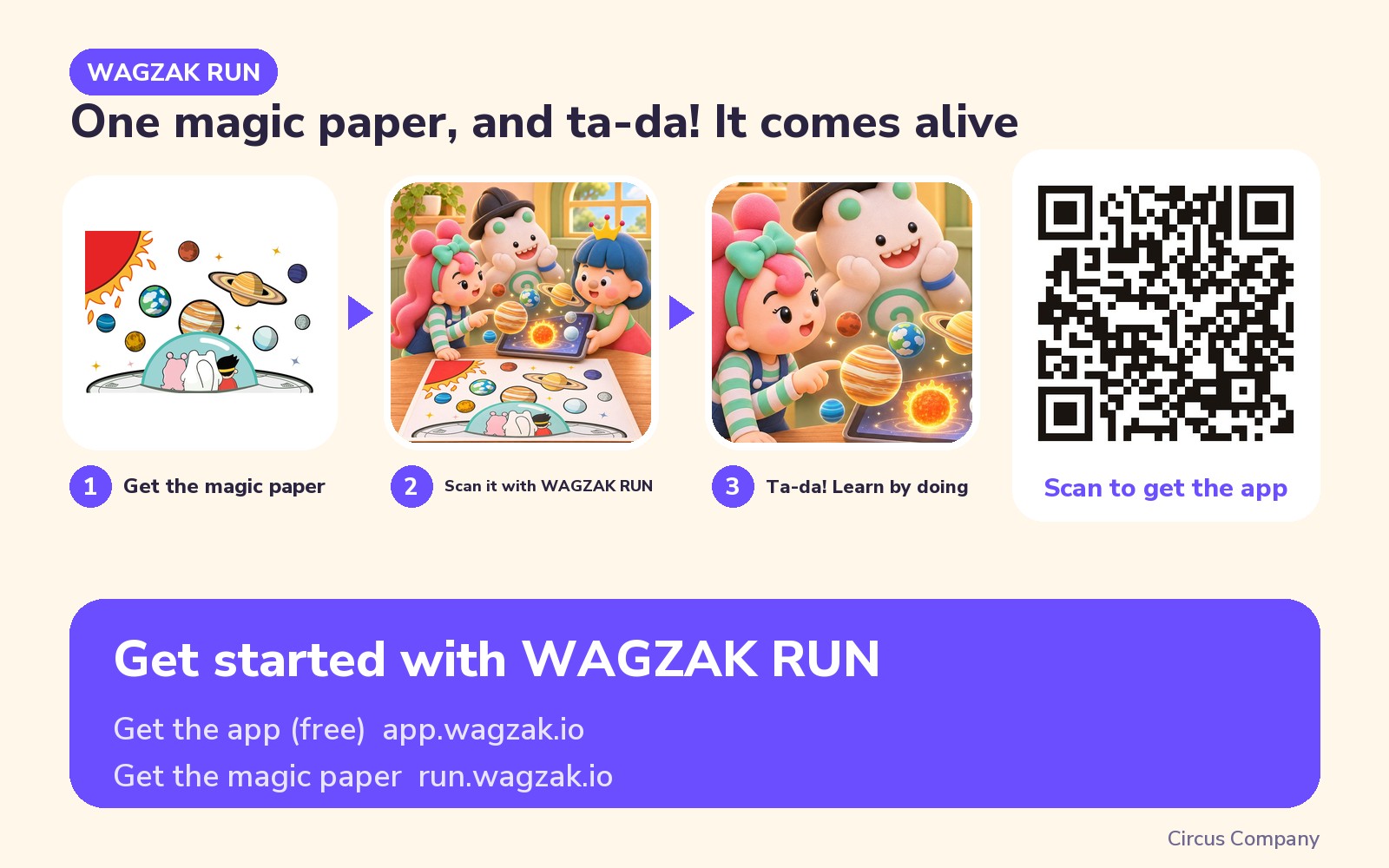
Getting ready takes three steps.
- Get the magic paper: Download Solar System Journey, free and without signing up.
- Get WAGZAK RUN: Download the app and choose from 51 languages.
- Point and see: Make the picture fill the screen. New to it? See how to use it.
- WAGZAK RUN · Circus Company · free of monthly subscription fees · 51 languages · https://app.wagzak.io/en/